Psychosomatic Symptoms Explained:
How Stress Creates Real Physical Pain

Author: Alex Guru | Reading time: 12 minutes

Anatomical engraving of a human body controlled by the brain — a metaphor for the mind-body psychosomatic connection.

You've seen every specialist. The cardiologist says your heart is fine. The gastroenterologist finds no ulcer. The neurologist recommends vitamins and rest. And yet — the chest tightness, the lump in your throat, the bone-deep fatigue — none of it goes away. The doctors shrug and deliver their verdict: 'It's stress-related.' In clinical terms: psychosomatic illness.

Many people hear that and feel accused of making it all up. But the pain is real. The muscle spasm is real.

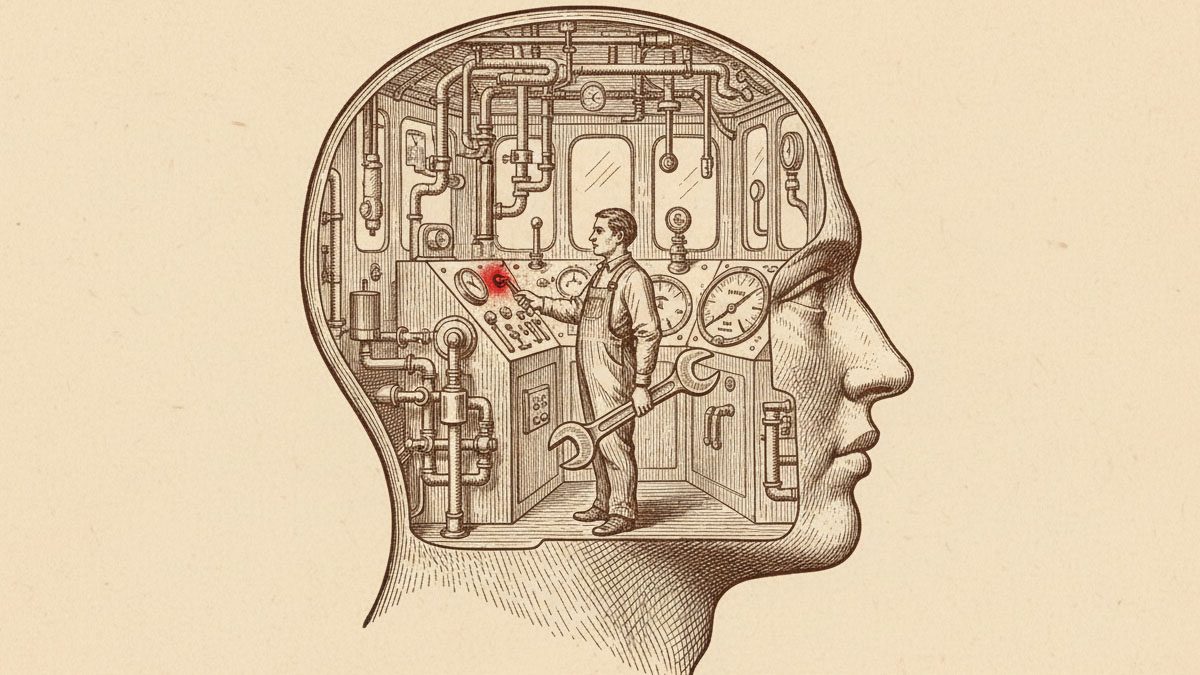
At the 'Consciousness Workshop', we don't deal in vague spiritual concepts. We use an engineering approach. Your body is a sophisticated biomechanical system, and your mind is the software that runs it. When the software crashes — chronic stress, suppressed emotions — the hardware (your body) inevitably starts to break down.

In this article, we'll walk through exactly how that process works, give you a 'map' of the body's distress signals, and show you how to stop sending your system the commands that are wearing it out.

🛡 Before You Begin:
Medical Disclaimer and Emotional Safety

Psychosomatic illness is a genuine medical reality — but it is a diagnosis of exclusion. The symptoms described here (pain, spasm, a lump in the throat) can also be signs of physical, organic conditions.

Important: Before applying any self-regulation techniques, get a full medical check-up. If your doctors have confirmed: 'There's nothing physically wrong — it's stress-related' — then this article is for you. Do not attempt self-treatment for acute physical pain.

Psychosomatic Medicine Origins:
What Research Says

'Many chronic disorders are not diseases that arise out of nowhere — they are the result of a prolonged way of life in which the body is kept in a constant state of high alert.'

— Franz Alexander, founder of psychosomatic medicine.

How Stress Becomes Physical Symptoms:
The Mind–Body Pathway

The mind-body connection is not mysticism — it's pure physiology. Your body is an executive system that faithfully carries out the instructions of your brain.

Think about what happens when you're suddenly frightened. An instant surge of adrenaline, a racing heart, muscles tensing throughout your body. This is 'Emergency Mode' — a survival response designed to help you fight or flee.

The problem for modern humans is that our 'threats' — a difficult boss, a mortgage, the daily news cycle — hit us around the clock. But we don't run, and we don't fight back. We sit at our desks and smile politely.

Engraving of a knight in full armour sitting at an office desk — a metaphor for chronic tension in a safe environment.

Here's what happens to the system:

  1. Command:
    The brain sends an alarm signal (negative emotional state).
  2. Mobilisation:
    The body tenses its muscles (preparing for impact) and shifts its biochemistry.
  3. Blockage:
    No action follows. The energy has nowhere to go.
  4. Lock-in:
    To contain that tension and maintain a composed outward appearance (suppression), the body creates a chronic muscular holding pattern. It is precisely the habit of suppressing emotions — rather than processing them — that converts a mental impulse into a physical muscular block.

Over time, blood flow to the affected area becomes restricted, and the organ begins to hurt. That is how illness is born. It is not a punishment from the universe — it is a system failure caused by incorrect operation.

In engineering, there's a concept called 'metal fatigue' — the gradual wear of materials under repeated stress. In medicine, the equivalent is called Allostatic Load.

It is the cumulative toll that the body pays for adapting to chronic stress. A week of anxiety and your system can recover. A year of it, and you reach a 'point of no return' — where organs begin to sustain genuine physical damage, even after the stress itself has passed.

Mind–Body Feedback Loop:
How Thoughts and Sensations Reinforce Stress

In the lessons of our Course 5, we explore the Law of Resonance in depth. It states:

  • 'Negative emotions generate and amplify unpleasant physical sensations. Positive emotions generate pleasant ones.'
  • 'What wears the body down is not a single stressful event — it is the persistent Background Anxiety that keeps the muscles braced 24/7, even during sleep.'
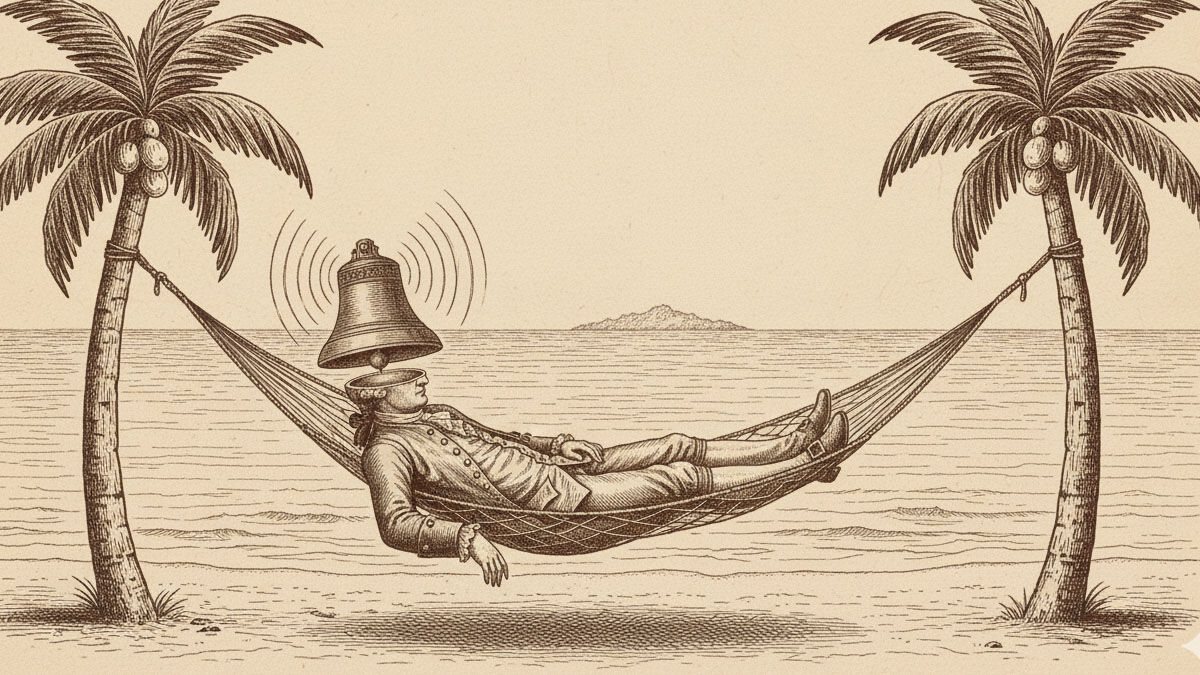
Engraving of resonating bells — a metaphor for how tension transfers from the mind to the body.

Think of it like an echo in a canyon.

  • Top-down pathway: You think about an uncomfortable conversation -> your jaw tightens and a headache begins.
  • Bottom-up pathway: You have a headache -> you become irritable and start seeing everything in a negative light.

Most people are trapped in a state of 'Negative Resonance'. The body and the mind are constantly sending each other distress signals, amplifying each other's suffering. The goal of the 'engineer' is to switch the system into 'Positive Resonance' — where a relaxed body calms the mind, and a calm mind allows the body to heal.

Psychosomatic Symptoms Chart:
Common Signs and Emotional Triggers

The internet is full of oversimplified charts suggesting things like 'a sore heel means you're harbouring resentment towards a relative.' We'll move beyond that kind of pop-esoterica and look at the psychological roots of physical illness through the lens of muscular tension patterns and functional body systems.

The Full Breakdown Map: 'Psychosomatic Symptoms Chart'

Organ / Area
🧠 Emotion (Root Cause)
⚙️ Physiology (Mechanism)

Head (Migraines)

Hypercontrol, perfectionism.

Spasm in the neck's blood vessels restricts blood flow + chronic tension in the scalp muscles.

Gut (Gastritis / IBS)

'I can't stomach this situation', fear.

The vagus nerve suppresses gut motility and enzyme secretion under stress.

Heart

Lack of joy, suppressed love or grief.

Chronically elevated adrenaline wears down the heart muscle over time.

Lower Back

Financial fear, feeling unsupported or ungrounded.

Spasm of the deep back muscles (psoas) — the body's instinctive 'brace for impact' response.

Skin (Allergies / Eczema)

Boundary violations, the urge to 'create distance' from others.

Histamine release triggered by nervous system overactivation.

A Closer Look at Each System:

Anatomical engraving mapping psychosomatic zones on the human body.

1. The Head (The Control Centre)

  • Symptoms:
    Migraines, pressure headaches, a heavy sensation in the skull.
  • Root cause:
    Processor overload. An obsessive need to control everything, excessive rationalism, and the suppression of feelings in order to appear composed. You run the same 'mental chatter loop' on repeat, never allowing the system to cool down. This relentless internal monologue keeps the brain's blood vessels in a state of constant spasm.

2. The Throat (The Release Valve)

  • Symptoms:
    A lump in the throat, recurring tonsillitis, loss of voice. (If this is your primary symptom, read our detailed breakdown of the voice-blocking mechanism.)
  • Root cause:
    A blocked communication channel. You wanted to say something — to object, to shout, to cry — but your internal censor stepped in ('don't make a scene', 'that's not appropriate'). The impulse became lodged in the muscles of the larynx.

'If your main symptom is difficulty swallowing or a persistent 'blockage' in your throat, read the full breakdown in the article A Lump in the Throat and Chest Heaviness.'

3. The Shoulders and Neck (The Load-Bearing Structure)

  • Symptoms:
    Neck and upper back pain, chronic muscle tension, trapped nerves.
  • Root cause:
    Over-responsibility. You've taken on everyone else's burdens ('the weight of the world on my shoulders') and live in constant fear of not coping. Instinctively, you draw your shoulders up toward your ears — the body's protective posture when bracing for criticism or a blow.

4. The Chest (The Emotional Centre)

  • Symptom:
    A feeling of heaviness, inability to take a full breath, tingling sensations around the heart.
  • Cause:
    Suppressed emotions. A persistent negative emotional background — grief, resentment — has built up to such a degree that it literally presses from within. The intercostal muscles have formed a 'suit of armour' to shield you from the pain of disappointment.

«Chest tightness is often mistaken for a heart attack. If it comes with a fear of dying, read our guide: Panic Attack or Just Stress?».

5. The Stomach and Gut (The Processing Plant)

  • Symptom:
    Gastritis, stomach ulcers, IBS.
  • Cause:
    An inability to 'digest' a difficult situation. Fear of the future. You are stuck in circumstances you cannot accept but cannot escape. The body literally begins to consume itself under the strain.

Important:
This table is not a diagnosis — it is a compass. It shows you where to look for a deeper breakdown in your thinking patterns.

Rule Out Medical Causes First:
When to See a Doctor Immediately

Table: 'Should I See a Doctor or a Therapist?'

Indicator
🚑 Organic Condition (Doctor)
🧠 Psychosomatic (Therapist + Doctor)

Connection to stress

Pain is present regardless of mood — during holidays, during sleep.

Flares up after arguments, deadlines, or anxious thoughts.

Response to medication

Medication provides consistent relief.

Medication offers little or temporary relief, but sedatives work well.

Location

Clear and consistent with anatomy.

Pain 'wanders', shifts in character, described in metaphors ('like a knife twisting inside').

Test results

Abnormalities show up in tests (bloodwork, ultrasound, MRI).

All tests come back clean ('perfectly healthy on paper'), yet symptoms persist.

Why Medications Often Don’t Fix Psychosomatic Root Causes

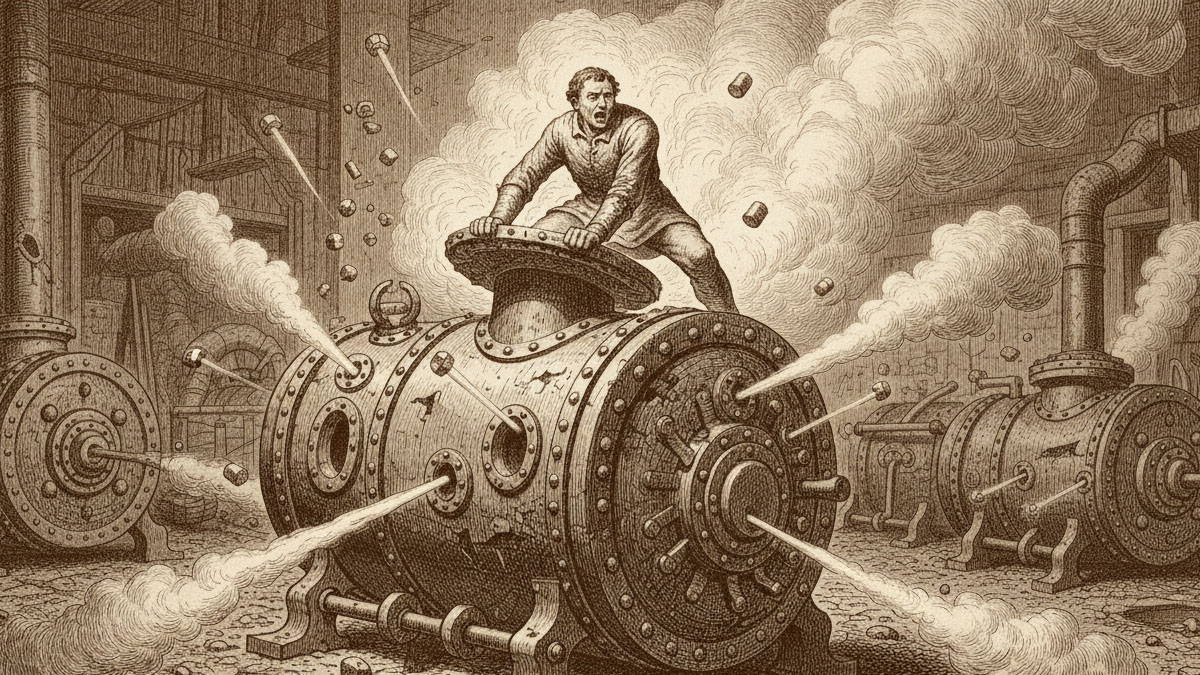
Mechanic ignoring a danger warning light — metaphor for treating symptoms instead of the root cause of illness

When the 'Check Engine' light comes on in your car, you don't slap a piece of tape over it so it stops bothering you. You take the car to a garage.

Taking painkillers for a psychosomatic condition is exactly that piece of tape. You silence the signal (the pain), but the underlying cause (emotional tension) remains. What's more, the problem begins to 'migrate'. You treat your stomach with medication but don't address the anxiety — and a month later, you develop high blood pressure. The system simply finds another outlet for the pressure.

All illness starts with stress — this isn't a cliché, it's a technical fact. Until you change the instructions your brain is sending to your body, your body will keep breaking down.

Mind–Body Healing Plan:
Steps to Break the Stress–Symptom Cycle

In the 'Body Language' course, we use a two-step approach.

'Holding muscular tension is the single most draining item in your Energy Budget. When you release the body, you free up an enormous reserve of strength.'

Step 1. Body Scan (Diagnosis)

You need to 're-inhabit' your own body. Most people live entirely in their heads.

  • Practice:
    A daily body audit. Ask yourself: 'Where am I holding tension right now?' Ignoring these signals for years drains your energy completely. (Read more in the article Emotional Burnout and Chronic Fatigue).
  • Acknowledge the connection:
    'My neck aches not because of a draught, but because I'm dreading tomorrow's meeting.'
  • 'To catch tension before it becomes pain, you need to activate the mode of the Impartial Observer and scan your body with focused awareness.'

Step 2. Addressing the Root Cause

Work with the emotion, not the pain.

Body Technique:
Tension Release (PMR)

Progressive Muscle Relaxation (PMR): This is the gold standard for releasing muscular tension — also known as the Jacobson technique.

To release a muscle that the brain is holding in a state of spasm, you first need to... tense it even more.

  1. Maximum tension:
    Clench your fists, raise your shoulders to your ears, furrow your brow. Tense your entire body for 5 seconds until it trembles.
  2. Sudden release:
    Exhale sharply and let your body 'drop'.
    The contrast:
    Your brain registers the difference between tension and stillness, and rewrites its default command.

Learn to Decode Body Signals:
Practical Mindfulness Skills

Your body is not your enemy, forever failing you. It is your most honest ally. It is ready to serve you faithfully — the moment you stop sending it instructions for self-destruction.

In Course 5 'Body Language' we cover in detail:

  • How to tell the signals of discomfort apart from the signals of well-being.
  • How to use the 'Law of Resonance' for healing.
  • Deep physical relaxation practices that outperform medication.

Psychosomatic Illness FAQ:
Symptoms, Causes, and Treatment

Absolutely not! The engineering approach does not reject medicine. If you are in acute pain — see a doctor. Psychosomatics addresses the root cause and prevention. Medicine addresses the consequences. The two must work together.

The engineering principle is this: first, rule out a hardware fault (an organic condition), then fix the software (the mind). Thorough examination first, psychosomatic work second.