Sleep and Nutrition for More Energy, Focus, and Productivity

Author: Alex Guru | Reading time: 6 minutes

Engraving of a man with a furnace inside his body — metaphor for food as fuel powering the human machine

You try to stay productive — reading time-management books, working on motivation. But by lunchtime your mind starts to fog over, and every morning you hit snooze five times. You keep looking for the problem in your psychology, while ignoring the fact that your hardware (your body) simply can't handle the load. (We explored the four hidden reasons behind morning fatigue in our article Why Do I Wake Up Tired?).

In today's world, taking care of the body is often reduced to aesthetics (losing weight) or treating illness. But from an engineering-of-the-mind perspective, the body is a generator. Feed it low-quality fuel and never let it cool down, and the system will inevitably break down — in the form of apathy and irritability. Ignore the physics long enough, and it leads to full-blown Emotional Burnout, where even extended rest stops making a difference.

In this article, we'll cover beginner biohacking — no complex supplement stacks required. We'll look at food and sleep as tools for tuning your most important computer: your brain.

Food and Sleep:
Definition and Why They Drive Daily Energy

Physical resource is the foundation of your energy pyramid. Within our framework, the body is not merely a vessel — it is the primary instrument that powers your higher mental functions: mood, willpower, and creativity. Managing your physical resource comes down to two core protocols: quality recovery (sleep) and clean fuel (nutrition) — both of which shift the body out of emergency mode and into peak performance.

How Sleep and Nutrition Affect Brain Chemistry, Mood, and Focus

Engraving of an airship being serviced — metaphor for sleep as repair and food as refuelling the body

Why are sleep patterns and productivity more tightly linked than most people realise? And how does food affect your mood?

1. Sleep as a full recharge.

The nervous system has a 'golden window' for recovery — roughly between 10 pm and 2 am. During these hours, melatonin production peaks and the brain actively clears out toxic waste. If you go to bed at 2 am, you may sleep — but you don't truly recover. You miss the deep-recharge cycle. Come morning, your 'battery' is only at 40% — barely enough to survive the day, let alone achieve anything meaningful.

2. Food as fuel.

For your body, every meal is either fuel (it gives you energy) or a brake (it takes energy away). Heavy food and sugar demand enormous resources to digest and process. Instead of thinking and creating, your body burns through its entire budget just keeping your digestive system running.

The brain needs to cool down in order to fall asleep. To trigger melatonin release, your core body temperature needs to drop by about 1°C.

  • Common mistake: Sleeping in a warm room under a heavy duvet.
  • Fix: Air out the room and aim for a temperature of 18–19°C.
  • Pro tip: Take a hot shower before bed. When you step out, your blood vessels dilate to release heat, causing your core temperature to drop sharply. That's your brain's cue: 'Time to shut down.'

Common Energy Drains:
Sleep Debt, Sugar Crashes, and Caffeine Cycles

Scenario 1: The Sugar Rollercoaster

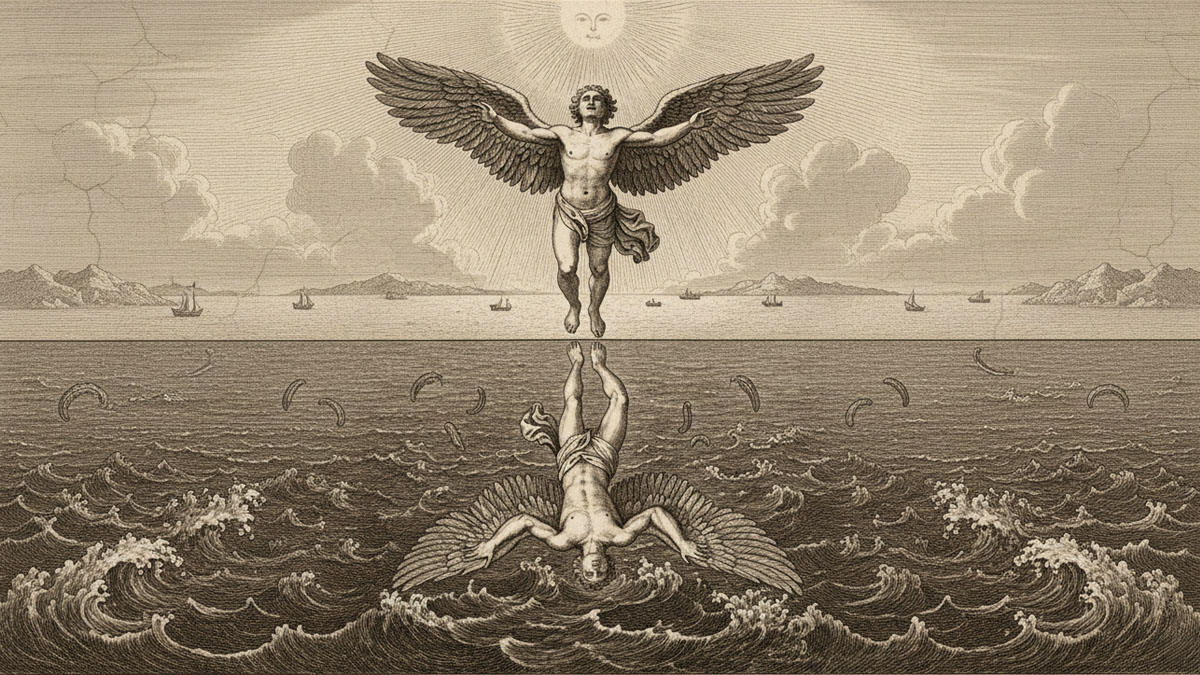
Engraving of Icarus soaring and falling — metaphor for the sharp energy spike and crash caused by sugar

You feel tired and reach for a chocolate bar to get a quick boost. More often than not, this isn't real hunger — it's an attempt to numb an emotion. (Read more about the 'emotional eating' mechanism in our article The Psychosomatics of Excess Weight).

How it works:
You get a sharp glucose spike — a burst of energy lasting about 20 minutes — followed by a crash that drops you below your original baseline. This isn't eating for energy; it's borrowing energy at an extortionate interest rate. An hour later, you feel even more drained and irritable than before.

Scenario 2: The Night Owl Illusion

Engraving of a man smashing a clock mechanism — metaphor for disrupting the body's natural circadian rhythm

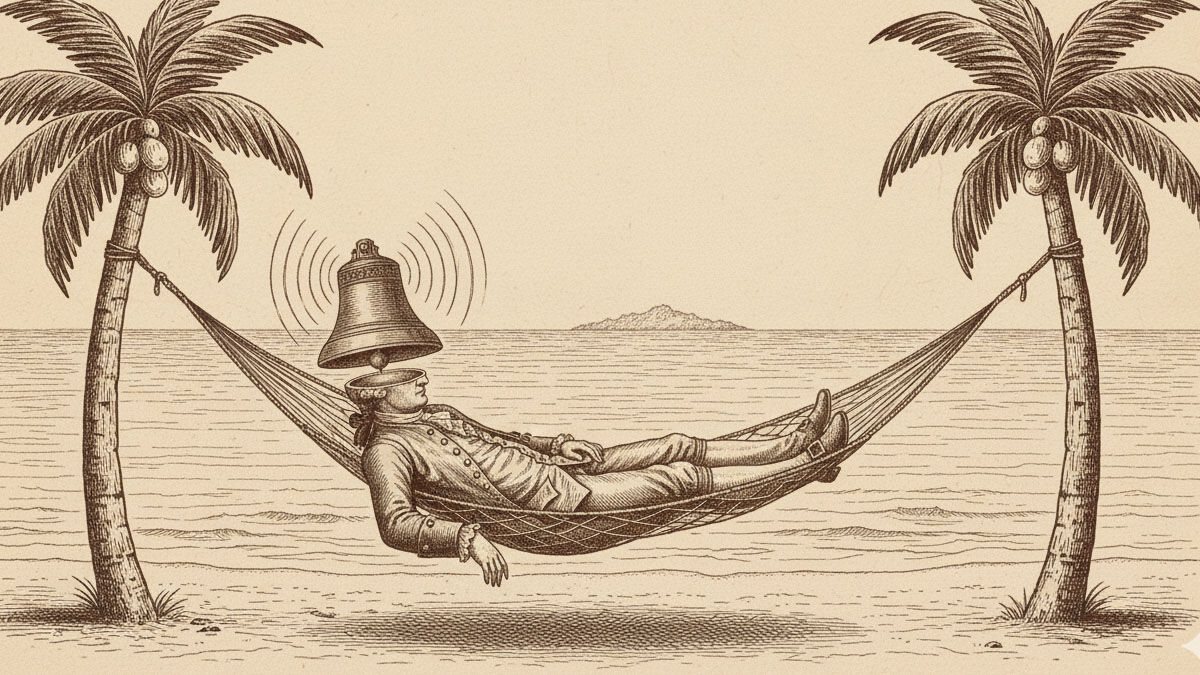
You work until 3 am, convinced you're a 'night owl', then sleep until 11.

How it works:
You've thrown your circadian rhythm off balance. The stress hormone cortisol stays elevated, melatonin never kicks in properly. You wake up with your head in a fog and spend half the morning just getting into gear. This isn't a personality trait — it's a settings error.

Chronobiologist Till Roenneberg demonstrated:
Genuine genetic 'night owls' make up only around 15% of the population.

Most people who identify as night owls are actually suffering from a disrupted circadian rhythm caused by artificial light — primarily screens.

  • Cut out screens two hours before bed, and within a week your 'night owl tendencies' will fade. You'll naturally start feeling sleepy around 10:30 pm. It's not genetics — it's light pollution.

Find Your Energy Fuel:
What Your Body Runs On Every Day

How food controls your brain.

Table: 'Glycaemic Index vs. Sustained Energy'

Fuel type
🍩 Fast Carbohydrates (Sugar, refined flour)
🥑 Fats and Protein (Nuts, fish, eggs)

Energy spike

Instant and sharp (15–30 min).

Gradual and sustained (3–4 hours).

Insulin response

Peak spike (hard on the pancreas).

Steady and stable.

After-effect

'Sugar crash': Drowsiness, brain fog, cravings for more.

Mental clarity: Consistent focus and performance.

Engineering verdict

Dirty fuel. Rapid wear and tear.

Clean fuel. High efficiency.

Quick Fixes:
Simple Sleep and Diet Changes for Instant Energy

Engraving of scales weighing the energy effect of food — metaphor for choosing meals by how light and energised they make you feel

You don't need to become an ascetic. You just need to learn to listen to the feedback your system is giving you.

1. The '–15 minutes' sleep rule.

Don't try to overhaul your sleep schedule overnight. Simply go to bed 15 minutes earlier than you did yesterday. Shift gradually, until you start capturing those 'golden hours' before midnight.

2. The energy test (Nutrition).

Forget complicated diets. Use just one criterion. Thirty to sixty minutes after eating, ask yourself: 'Did this meal give me energy, or take it away?'

  • If you feel alert and light — it's fuel.
  • If you feel sluggish and heavy — it's a brake.
    Simply stop eating the 'brakes', and your energy levels will climb.

The Nutrition Protocol: 'Dress Your Carbs'

A method by biochemist Jessie Inchauspé. A simple eating protocol that stabilises blood sugar.

To avoid a glucose spike and the inevitable crash that follows, don't change what you eat — change the order in which you eat it.

The algorithm:

  • First — Fibre: A salad or vegetables (these create a buffer lining in the stomach).
  • Then — Protein and Fat: Meat, fish, eggs.
  • Last — Carbohydrates and Sugar: Rice, bread, dessert.

This sequence reduces your glucose spike by up to 70%. You still enjoy your food — you just don't crash afterwards.

  • 'If the glymphatic system didn't complete its cycle (due to poor sleep), the resulting toxin build-up causes morning brain fog — see the article Why Do I Wake Up Tired?'.
  • 'Chronic sleep disruption is a near-guaranteed path to Emotional Burnout within 6–12 months.'
  • 'Sugar cravings are often an attempt to eat your feelings away. Read more in the article The Psychosomatics of Excess Weight'.

Getting Started:
A 10-Minute Plan for Better Sleep and Nutrition

You can't build a skyscraper on a swamp. You can't achieve genuine mindfulness and lasting happiness if your body is drained by toxins and sleep deprivation.

In the premium Lesson 'Physical Drains on Your Life Energy: Sleep, Food and Sex' we explore in depth:

  • Why the quality of your sleep matters far more than the quantity.
  • How to identify the specific foods that are secretly draining your energy.
  • Why your body is your best nutritional guide — once you learn to listen to it.

Start by getting the foundations right.