Spot Fake Self-Help:
Choose Self-Improvement That Actually Works

Author: Alex Guru | Reading time: 6 minutes

Engraving of a charlatan selling bottles of smoke to a crowd. Metaphor for snake oil self-help courses and empty promises.

A genuine self-development method is a set of repeatable tools and frameworks that produce predictable results when followed correctly — regardless of how much the student 'believes' in them.

Snake oil self-help (in the context of online courses) is the sale of emotional highs — hope, euphoria, temporary excitement — without giving people the actual tools to change their lives. It hands you a fish instead of teaching you to fish.

Today's market is flooded with promises of 'instant transformation', 'quantum leaps', and overnight healing. If you read the **reviews of personal growth courses**, you'll notice a pattern: the initial euphoria almost always gives way to disappointment.

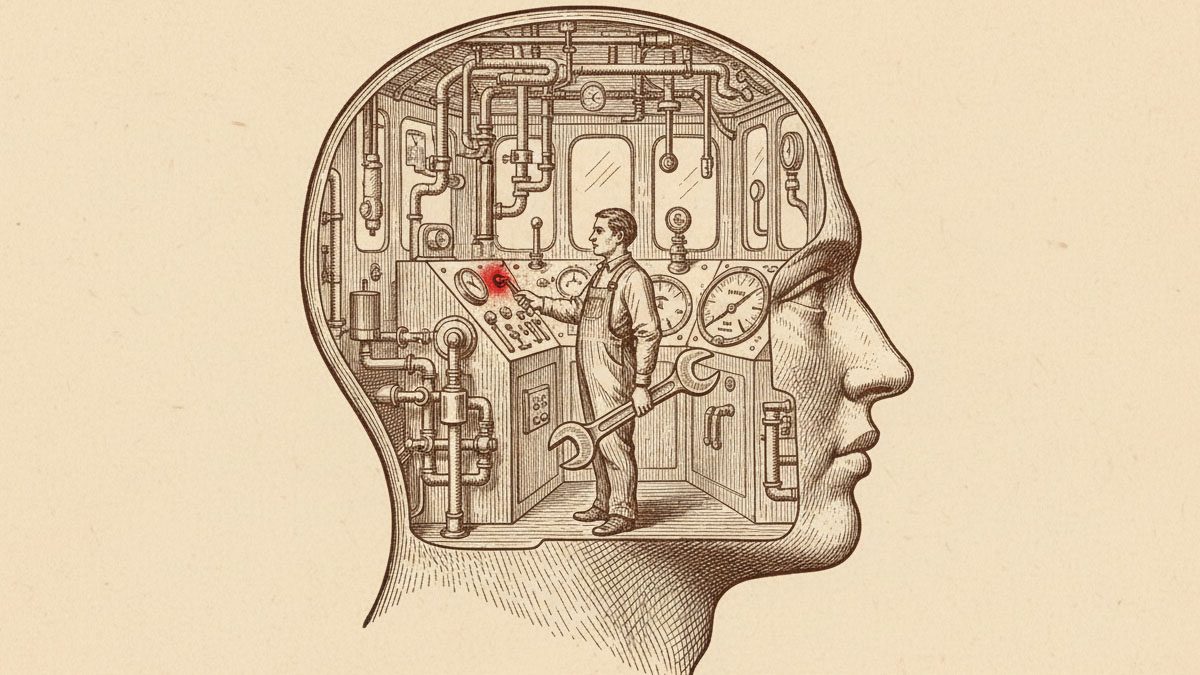
As someone who studies the mechanics of the human mind, I'd like to set aside the hype and look at this market from an engineering perspective. How do you tell a working blueprint from a pretty but hollow picture? This article argues that the problem with most personal development courses isn't that they're 'bad' — it's that they're selling the **Survivorship Bias** and the **Barnum Effect** dressed up as genuine knowledge.

Richard Feynman (Nobel Prize winner) coined the term 'Cargo Cult Science':

  • Indigenous islanders watched planes drop crates of supplies from the sky.
  • To summon more planes, they built life-size runway replicas from bamboo and wore coconut-shell headphones.
  • They were imitating the form without understanding the mechanics.

Most self-help content is Cargo Cult thinking.
The message is: 'Billionaires wake up at 5am. So wake up at 5am, and you'll become a billionaire.'

The engineering conclusion:
Copying the outward signs of success without understanding the underlying architecture — the mindset, the skills, the resources — simply doesn't work. A bamboo runway won't make planes land.

How Real Self-Improvement Works:
Dopamine Motivation vs Skill Building

Comparison of a theatre audience and a blacksmith at work. Metaphor for the difference between motivation and building real skills.

Why do people buy empty promises?

Because our brains are wired to look for shortcuts and 'magic pills'. (We explored why chasing quick fixes and positive affirmations leads to anxiety in our article The Positive Thinking Trap.)

1. Selling empty promises: 

This runs on dopamine. You're shown a glamorous lifestyle — yachts, Bali, perfect relationships — and told: 'You can have this too, just believe!' You buy the course, feel a surge of motivation, and for about a week you feel unstoppable. Then the emotional high fades, no real skills have formed, and you crash. The foundation was never built.

2. A genuine method: 

This works through neuroplasticity. No miracles are promised. Instead, you're told: 'There's a bug in your system — for example, a habit of taking things personally. Here's the tool. Here's the instruction. Work on this for 5 minutes every day.' It's less exciting than dreaming about a yacht, but it's what actually builds a skill.

The difference is the same as between watching a film about champions (you leave inspired, but no stronger) and going to the gym (you leave tired, but genuinely stronger).

Quick Self-Assessment:
Are You Consuming Inspiration or Practicing Change

The table below shows the difference between a 'show' (Motivation) and genuine 'learning' (Skill).

Table: 'Dopamine (Motivation) vs. Neuroplasticity (Skill)'

Parameter

🎪 Snake Oil (Motivation)

🎓 Genuine Method (Skill)

Primary driver

Dopamine (the thrill of a free lunch).

Acetylcholine (focused effort).

How it feels in the process

Euphoria, 'I can do anything!', effortless.

Resistance, difficulty, mental strain.

Role of the teacher

Idol / Star on stage.

Instructor / Mechanic.

Result after one month

Dopamine crash (rebound effect).

New neural pathway (lasting habit).

Focus

'What you'll get' (the yacht).

'What you'll need to do' (the work).

Self-Help Red Flags vs Evidence-Based Personal Growth Systems

When deciding how to choose a course, watch for these three key markers.

1. The Promise:
External Results or Internal Change?

Snake oil self-help promises external outcomes the author has no power to deliver. 'You'll earn a million', 'You'll find your perfect partner.' This is dishonest — no one can guarantee control over the outside world.

  • A genuine method: 
    Promises internal shifts that depend entirely on you. 'You'll learn to dissolve anxiety', 'You'll understand what you truly want.' That's an honest promise. When you change your inner settings, the outer world tends to follow (in line with the principles of how the mind works) — but the guarantee applies to the skill itself.

2. The Tool:
Ritual or Algorithm?

Comparison of a shaman with a drum and a watchmaker at work. Metaphor for the difference between magical thinking and an engineering approach.

Snake oil self-help offers mystical rituals. 'Manifest your abundance', 'Breathe through your womb', 'Ask the Universe.' The actual mechanics are hidden behind a fog of mystery.

  • A genuine method: 
    Offers clear, understandable frameworks. In the 'Workshop' we use precise terms: diagnosis, removal, redirecting attention. We explain why something works — grounding it in neuroscience and psychology — rather than simply asking you to believe.

3. The Author's Position:
Guru or Researcher?

Engraving of an idol on a pedestal and a guide with a map. Metaphor for the difference between a self-appointed guru and a genuine researcher.

Snake oil self-help: 'I'm extraordinary — just do what I do.' The author places themselves on a pedestal.

  • A genuine method: 
    'I'm a researcher who found a map.' We call this approach Secular Spirituality — growth without guru-worship or mysticism. In our materials (including 'About the Method') I say it plainly: 'I'm not a guru. I'm a researcher who has systematised my mistakes and discoveries.'

Real-World Examples:
Magical Thinking vs Practical Self-Development Tools

Engraving of a jeweller testing gold for authenticity. Metaphor for critically evaluating self-development courses before buying.

The situation: 

Someone is struggling financially.

The 'empty promises' approach: 

'Your chakras are blocked. Visualise a flow of money. Feel what it's like to be wealthy.' The person spends their last savings on the course, visualises daily — and remains too afraid to take any real action.

The engineering approach:

'Let's run a diagnostic. You have a 'blind belief' that money is dangerous. (How to find and remove such limiting programmes using the 'Mirror' technique is explained in our guide Brain Antivirus.) You also have an autopilot habit of avoiding responsibility. Here's the 'Plan B' exercise to defuse the fear. And here's the Micro-Steps technique to get you moving.'

In the first case, you're waiting for a delivery from the Universe. In the second, you're fixing your own engine and driving yourself.

The Psychological Trick:
The Barnum Effect

The Barnum Effect (Forer Effect) — Why do horoscopes and online 'transformation' programmes feel so personally accurate?

Why does a guru seem to 'see right through you'?

They use vague statements that apply to virtually everyone: 'You have great potential, but fear is holding you back from fully expressing it.'

  • That statement fits Elon Musk just as well as it fits anyone else.
  • Your brain fills in the blanks and constructs personal meaning. Don't pay for the privilege of giving someone else's empty words your own significance.

Practical Checklist:
How to Vet Any Self-Development Course or Coach

Before paying for another course, run it through a common sense filter:

1. Is there a clear structure? 

Can you understand exactly what you will be doing, or is everything described in vague terms like 'you'll find happiness'?

2. Are there real tools? 

Will you receive specific techniques (such as 'Generating Joy' or a 'State Journal') — or will you simply be pumped full of emotion with nothing concrete to take away?

3. Does the author acknowledge difficulties? 

If you're told it will be 'easy and instant' — that's a red flag. Real transformation takes effort, setbacks, and learning from mistakes.

The Professional Filter:
Kirkpatrick's Levels

The Kirkpatrick Model is the gold standard for evaluating training effectiveness in the corporate world.

In professional Learning & Development (L&D), a course's impact is measured across 4 levels:

  1. Reaction:
    'Did I enjoy it?' (Info-gurus sell only this).
  2. Learning:
    'What did I actually retain?'.
  3. Behaviour:
    'What do I now do differently in my daily life?'.
  4. Results:
    'How have my key metrics changed (money/health)?'.

If a course promises Results (Level 4) while bypassing a change in Behaviour (Level 3) — that's fraud.

The Statistical Trap:
Survivor Bias

Survivor Bias:

You're shown 5 students who made a million.

You're not shown the 5,000 students who lost money.

  • The success of those five may be pure statistical chance — or down to their own individual efforts, completely unrelated to the course.
  • Demand the data:
    'What percentage of students complete the programme and achieve real results?' If there's no data — it's a casino.
  • 'Info-gurus exploit Toxic Positivity, shutting down your doubts and discouraging uncomfortable questions.'
  • 'A classic example of selling nothing but air is Manifestation Marathons, where fantasy is offered in place of action.'
  • 'Charlatans plant new Mind Viruses in your head under the guise of "abundance mindset".'
  • 'Your only real defence is the skill of Information Hygiene'.

Key Takeaways:
How to Avoid Snake Oil and Build Lasting Results

Real personal growth isn't magic. It's engineering. It's methodical, unglamorous work — but it's extraordinarily effective when it comes to genuinely rewiring your mindset.

If you're tired of 'success porn' and want something more than a magic wand — if you're ready for a reliable, practical toolkit to repair and fine-tune your life — welcome to the world of clear thinking.

Discover how our method works — built on logic, practice, and measurable results.