Karpman Drama Triangle:
Stop Rescuing, Victimizing, and Attacking

Author: Alex Guru

Engraving of a wheel featuring the Tyrant, Victim, and Rescuer figures — a metaphor for the Karpman Drama Triangle's endless cycle.

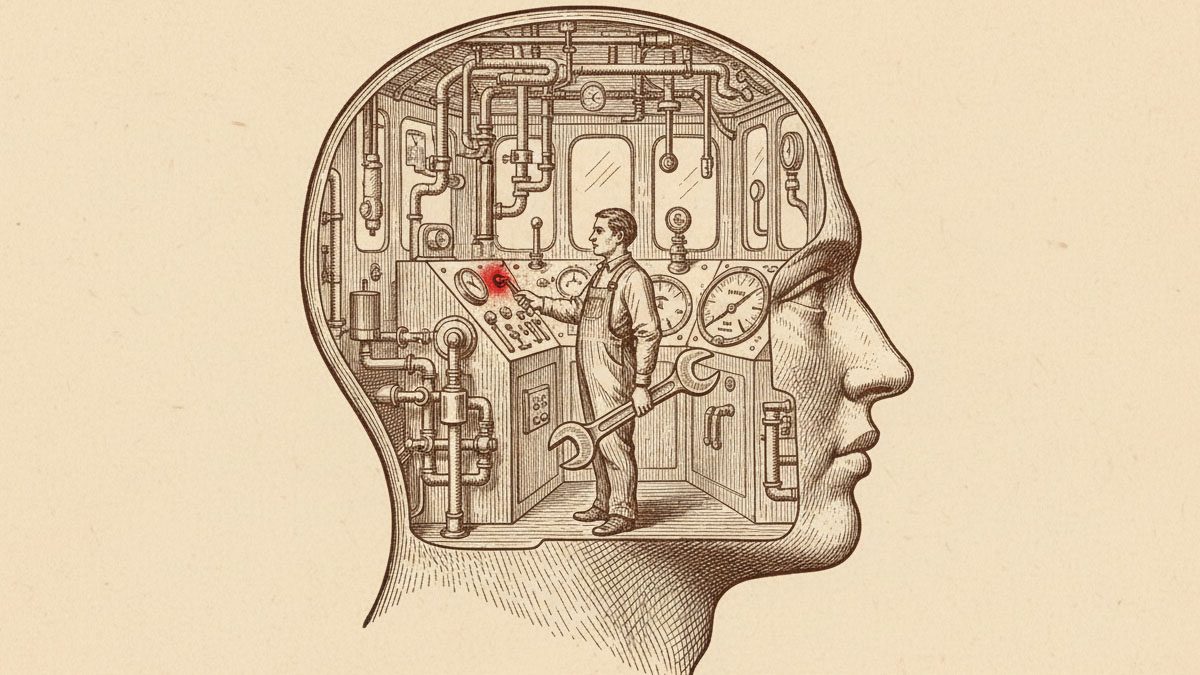
The Karpman Drama Triangle is a deeply ingrained psychological pattern in which people unconsciously rotate between three roles: Victim, Persecutor (Tyrant), and Rescuer. From a consciousness-engineering perspective, this is not simply a 'bad habit' — it is a closed energy loop. At its core, it is a form of mutual emotional energy drain, where each participant feeds off the emotions of the others.

This article draws on Transactional Analysis (TA) as its scientific foundation and offers a concrete way out — not as an abstract idea, but as a practical framework: the Winner's Triangle. You will come to understand that these are not 'malicious games' but rather a systemic bug in communication — one that can be fixed by upgrading your mental patterns. You will discover that being 'a good person' and being a Rescuer are not the same thing: the Rescuer is chasing a dopamine hit while quietly undermining others. The antidote is learning to become a Helper — one who operates by clear agreement.

How the Drama Triangle Works:
Hidden Payoffs and Emotional Addiction

Engraving of a merchant selling poisoned wine — a metaphor for hidden emotional payoffs and addictive relationship dynamics.

Many people looking for ways to escape the Drama Triangle make the same mistake: they try to change other people's behaviour. That never works. You cannot leave a game while you still benefit from playing it.

In the 'Consciousness Workshop', we view this triangle as a marketplace for surrogate emotions. We do not stumble into it by accident. We walk in looking for our next 'fix'.

1. The Victim Role:

Engraving of an adult in children's clothing seated on a throne — a metaphor for the hidden payoffs of the Victim role and emotional immaturity.

On the surface: Suffering and helplessness.

Hidden payoff:
Attention, sympathy, and — most importantly — a complete escape from personal responsibility. 'It's not my fault, it's everyone else.' There is a quietly addictive pleasure in feeling innocent.

2. The Rescuer Role
(Rescuer Syndrome):

Engraving of a person on stilts helping others — a metaphor for the Rescuer's pride and sense of superiority.

On the surface: Helpfulness, care, and altruism.

Hidden payoff:
A sense of superiority (Pride). 'I am capable and strong — they would fall apart without me.' The Rescuer does not help in order to help; they help in order to feel above others.

3. The Tyrant Role
(The Persecutor):

On the surface: Aggression, control, and criticism.

Hidden payoff:
A feeling of power and self-righteousness. Releasing inner tension through anger — the classic 'Attack' mode.

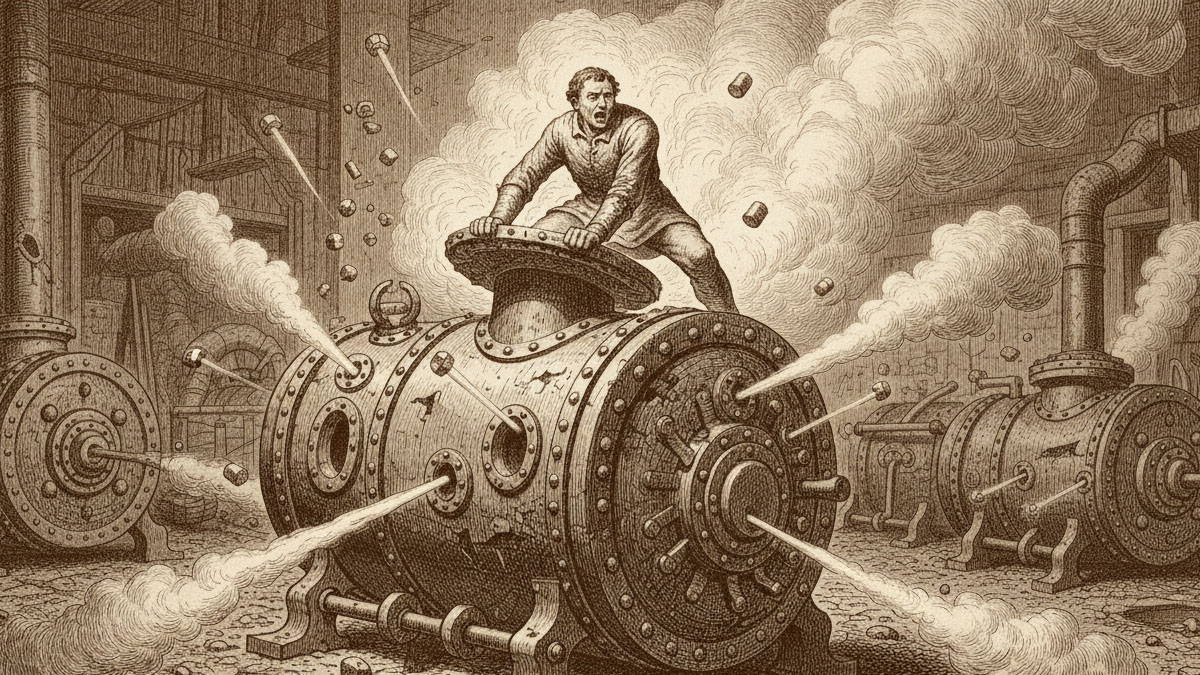
This Is the Perpetual Motion Machine of Suffering

The Rescuer helps the Victim. The Victim does not change. The Rescuer grows frustrated and becomes the Tyrant. The Victim cries. The Tyrant feels guilty — and becomes the Rescuer once more.

The Biochemistry of the Game:
What Are We Hooked On?

Neurochemistry: The 'Hormonal Hook' explains the biology here. People are not masochists — they are addicts.

Why is it so hard to leave a toxic relationship?

Each role delivers its own chemical reward:

  • Tyrant:
    Adrenaline + Testosterone (the rush of power and dominance).
  • Rescuer:
    Dopamine + Serotonin (the warm glow of feeling needed and virtuous).
  • Victim:
    Endorphins (emotional numbing through suffering) + Oxytocin (the comfort of being pitied).

Stepping out of the triangle feels like withdrawal, because the brain is suddenly cut off from its easy supply of feel-good chemicals.

Where did the triangle come from?

Stephen Karpman developed this model based on the theories of Eric Berne.

  • At its core is the concept of a 'Game' — a series of covert transactions (communications) that follow a predictable script and lead to an inevitable payoff (the 'sting'). (From Berne's classic: Games People Play)

The core bug:
The Game is not played to achieve an outcome (solving the problem) — it is played for the process itself (collecting emotional 'strokes' or cashing in emotional coupons).

Key insight:
As long as you are inside the Karpman Triangle, your true goal is NOT to solve the problem. Your real goal is to confirm your existing story about yourself.

Drama Triangle Examples in Relationships, Family, Work, and Friendships

Scenario 1: 'The Thankless Deed'

You notice a colleague struggling with a task. They have not asked for help, but you leap in to 'rescue' them — essentially doing their work for them — fully expecting gratitude in return. Your colleague takes it in their stride. You feel hurt ('After everything I do for them!') and slide into the Victim role, or lash out as the Tyrant.

The mistake:
You overstepped a boundary to feed your own ego. This is a textbook example of blurred personal boundaries — 'doing good' onto others so that we ourselves feel needed.

Scenario 2: 'Poor Me'

You are struggling financially. Instead of looking for practical solutions, you call a friend and spend an hour venting about politicians and your boss. Your friend offers suggestions. You respond: 'Yes, but... that would never work.'

The mistake:
You are not looking for a solution. You are looking for the energy of sympathy. This is the key to understanding how to stop feeling sorry for yourself — you have to admit that you are 'selling' your helplessness in exchange for attention.

⚙︎ The Entry Mechanism:
Discounting

Discounting is the key mechanism that pulls you into the Drama Triangle.

You enter the game only when you discount someone:

  • The Rescuer discounts the Victim's strength ('Poor thing — she'll never manage on her own').
  • The Tyrant discounts the Victim's worth ('You are worthless').
  • The Victim discounts their own abilities ('There's nothing I can do').

The engineering rule:
The moment you treat another capable adult as helpless, you have already stepped into the Rescuer role.

From Victim, Rescuer, and Persecutor to Empowerment:
Healthier Roles

The table below goes beyond simply naming the roles — it maps each one to its healthy alternative, based on Acey Choy's Winner's Triangle model.

Table: 'Drama vs. Awareness'

🎭 Drama Triangle Role (The Bug)
🌟 Real-World Role (The Upgrade)
🔧 What Changes?

Victim ('Poor me')

Learner / Creator

Stops complaining and starts asking for the tools needed to find a solution.

Rescuer ('I'll fix this')

Coach / Helper

Offers help only when asked, and only within clearly defined boundaries (a mutual agreement).

Tyrant ('It's your fault')

Philosopher / Assertive Leader

Does not blame — instead sets clear boundaries and holds others to agreed commitments.

How to Get Out of the Drama Triangle:
Mindful, Practical Exit Steps

Engraving of an actor leaving the stage and tearing up a script — a metaphor for breaking free from psychological games and releasing drama triangle roles.

The way out of the triangle is found in the same place as the way in — through radical honesty with yourself.

1. Identify your role.

The next time you are flooded with resentment or the urge to 'help' without being asked, pause. Ask yourself: 'Which role am I in right now — Victim, Tyrant, or Rescuer?'

2. Find the hidden payoff.

This is the hardest step. Ask yourself honestly: 'What am I actually getting out of this situation?'

  • Does it feel good to see myself as a saintly martyr?
  • Do I enjoy the sense of control?
  • Am I waiting for someone to feel sorry for me?

3. Refuse the 'fix'.

Tell yourself: 'I can see what I'm getting from this. But the price is my freedom and my energy. I choose to stop feeding on cheap emotional fuel.'

The moment you stop enjoying the game, it collapses. You become uninteresting to the other players, and the triangle dissolves.

The Anti-Rescuer Protocol

Practice: The '3-Question Rule' — a decision-making tool for Rescuers.

Before you leap in to 'help', ask yourself these three questions:

  1. Was I actually asked for help? (Clearly and directly — not hinted at).
  2. Do I genuinely want to help? (Do I have the energy and willingness?).
  3. Am I doing more than 50% of the work? (If so, you are creating dependency, not offering support).

If any answer is 'No' — stop. Do not intervene.

  • 'Entering the triangle always begins with a breach of Personal Boundaries.'
  • 'The Karpman Drama Triangle is the natural habitat of Emotional Vampires. Without the game, they have nothing to feed on.'
  • 'Stepping out of the Victim role is only possible when you have a solid Inner Core to stand on.'
  • 'Only the Impartial Observer — the part of you not caught up in the drama — can notice when the game has begun.'

Where to Start Today:
Simple Awareness Practices to Break the Pattern

Realising that we are attached to our own suffering is a shocking — yet deeply healing — insight. Without this understanding, any attempt to fix a relationship is simply rearranging the furniture in the same prison.

We explore the mechanics of this painful attachment in depth and offer practical tools to break free from it in our free Lesson: Hidden Pleasure: Why We Actually 'Love' Our Own Suffering.

This knowledge is your ticket to freedom.