Impartial Observer Explained:
How to Detach From Emotions

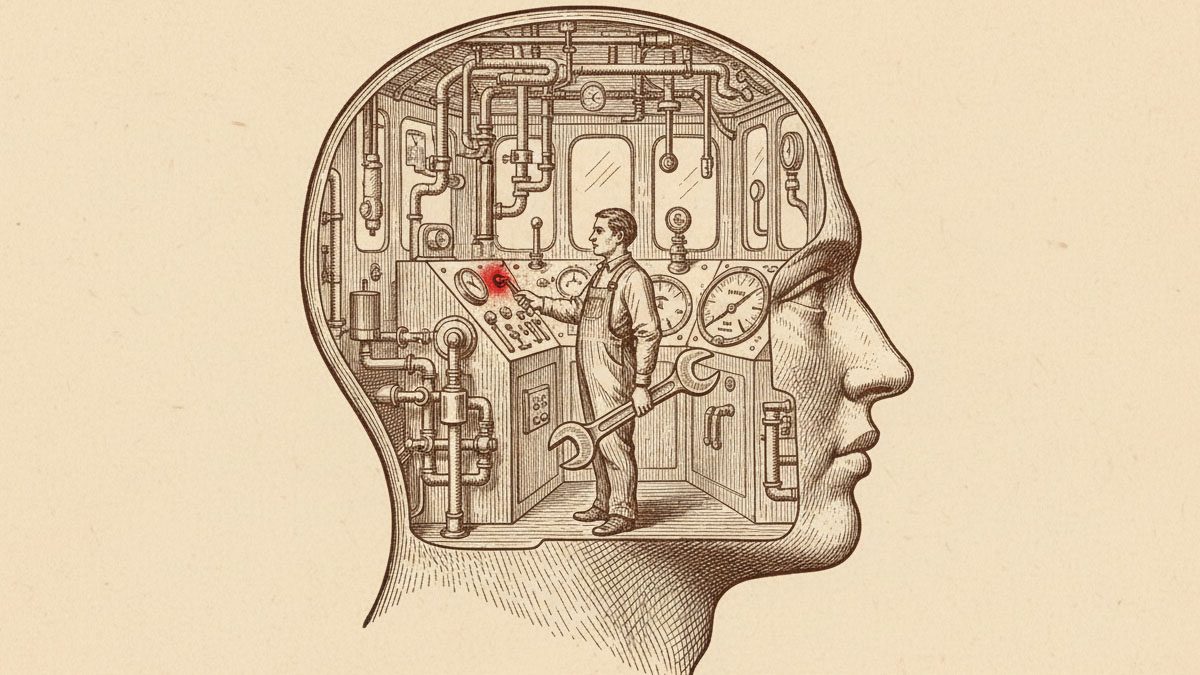
Engraving of a calm observer standing behind a person under stress. Metaphor for splitting into the one who feels and the one who watches.

The Impartial Observer is a meta-skill of attention management that allows you to split the psyche into two functional parts: the "Experiencer" (the one who feels the emotion) and the "Observer" (the one who registers the process without being drawn into it). From a practical standpoint, this is a deliberate dissociation (the first step toward "Ego Death" and personal evolution): you stop being the "data stream" (the anger, the fear) and become the "operator" who observes that data on a screen. This is the only position from which real self-mastery becomes possible.

🛡 Safety Warning:
When Not to Practice Deep Dissociation Work

The techniques described here — disidentification, stopping internal dialogue, working with the void — are powerful tools that significantly affect the psyche.

Contraindications:
Clinical depression, psychiatric disorders (schizophrenia, bipolar disorder, psychosis), use of strong psychotropic medications. If you are under psychiatric supervision, practice these techniques only with your doctor's approval.

If you experience intense anxiety or destabilization — stop the practice immediately and ground yourself.

How the Impartial Observer Works:
Attention, Separation, and Awareness

Engraving of a lighthouse keeper observing a storm from inside. Metaphor for the safety of the observer's position.

To understand the mechanics, picture the eye of a hurricane.
In an ordinary state, when a powerful emotion sweeps over you — such as a rage outburst — you are at the center of the storm. You are being spun around, battered by debris, unable to see or control anything. You are the hurricane.

The Observer position shifts your point of awareness from the storm's center into the safety of a meteorologist's bunker.

1. Separation:

You create a mental gap between "I" and "the Emotion."

2. Objectification:

You stop perceiving your state as your core identity («I am angry»), and begin treating it as an external object or a weather event («A rage signal has appeared in the system»).

3. Charge Reduction:

The moment you stop identifying with the emotion, it loses its fuel and begins to fade — transforming from a storm into a manageable flow of energy.

Experiencer vs Observer:
Who’s Driving Your Thoughts and Behavior

The difference in perception: How to tell where you are right now.

"Participant vs. Witness" Table

Parameter
🎭 Participant (Asleep)
🎥 Observer (Awake)

Where attention is focused

Inside the picture (caught in the drama)

Outside (watching the picture)

Response to pain

«It hurts! Why is this happening to me?!» (Suffering)

«A pain signal has arisen in the body» (Information)

Ability to think

Offline (autopilot / instinct in control)

Online (analysis and choice are available)

Degree of freedom

0% (You are a slave to the emotion)

100% (You can choose not to react)

Signs You’re Fused vs Observing:
How Each State Feels in Real Time

"Fusion" Mode (Default):

  • You say: «I'm furious!», «I'm terrified!».
  • You act on autopilot: you shout, cry, or shut down.
  • You see no way out, because the emotion has completely clouded your vision.
Engraving of a person watching monster-shaped clouds. Metaphor for perceiving emotions as temporary, passing phenomena.

"Observer" Mode (Mindfulness):

  • You say: «I notice my pulse has quickened and there is an urge to raise my voice».
  • You see the emotion as a "cloud" drifting across the sky of your awareness.
  • You retain the ability to think logically, even while the body is under stress.

Neuroscience of Switching Perspective:
From Autopilot to Meta-Awareness

Scientific fact (Neuroscience): This is not a "spiritual practice" — it is a shift between brain regions.

The Observer position is not a metaphor; it is a physiological process.

  • When you are in the grip of an emotional flood, the Limbic System (the ancient, instinctive brain) is dominant and the cortex goes offline.
  • The moment you say: «I notice that I am angry», you deliberately redirect energy to the Prefrontal Cortex (the center of logic and self-control).

The Limbic System cannot run at full power simultaneously with the Cortex. By activating the Observer (the Cortex), you physically cut the power to the emotional flood.

  • «Only the Observer can catch anger in time and apply the Poison Reminder technique».
  • «The Observer is the only one who can see their own Blind Beliefs, because they are standing outside the system».
  • «During a Panic Attack, stepping into the Observer position is the first act of rescue».

How to Practice the Observer Mindset:
Step-by-Step Grounded Technique

Engraving of a scientist studying fire under a glass dome. Metaphor for objectively observing and describing one's own emotions.

This skill does not appear on its own — it is a trainable form of mindfulness (practice). To activate the Observer:

1. Change your language:

In moments of stress, ban the phrase «I feel...». Replace it with: «I notice the feeling of...».

2. Describe the symptoms:

Become a scientist. Describe the physical sensations: «My jaw is clenched. There is heat in my chest».

3. Create distance:

Imagine this is not happening to you directly — you are watching a film about yourself from the outside. (This resembles classic meditation, but here we use it actively. To understand the difference, read the article Meditation vs. The Engineering Approach).

The Sports Commentator Method:
Narrate Thoughts Without Getting Hooked

To quickly step into the Observer position, start narrating your own actions in the third person — as if you are calling a game on live TV.

  • Instead of: «This is a disaster, I'm going to be late!»
  • Say: «And here we see the subject "Alex" beginning to panic. His pulse is rising. He rushes around the room searching for his keys. A fascinating stress response from a modern primate».

This technique instantly dissolves panic, because humor and detached observation are fundamentally incompatible with fear.

This is the foundational skill for moving from beginner to confident practitioner in Course 1. You can learn to stay grounded and clear-headed through any emotional storm in the full paid lesson: