Joy Anchors Explained:
Meaning, Neuroscience, and How to Use Them

Golden anchor holding a ship in a storm — metaphor for the Joy Anchor technique stabilizing the mind under stress.

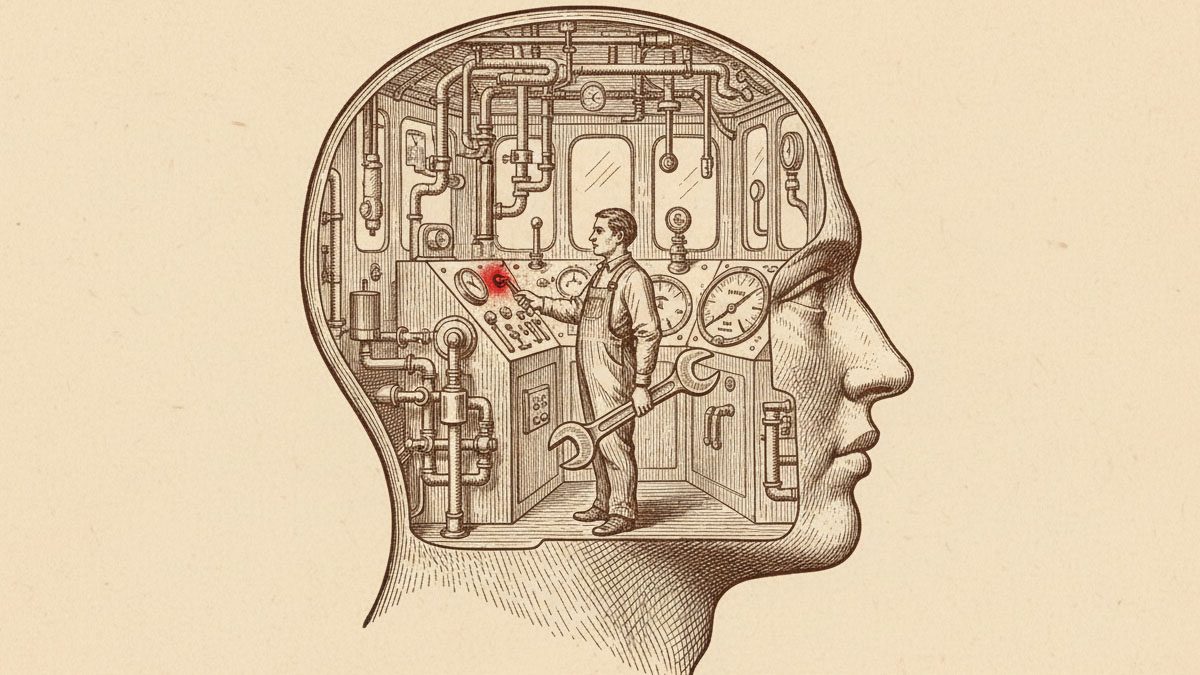
A Joy Anchor is a specific mental image, memory, or thought that acts as a reliable neural trigger — instantly activating a resourceful emotional state. Unlike abstract "positive thinking" (which often amounts to self-deception), an anchor is a finely tuned button on your mind's control panel. It lets you deliberately shift your brain's biochemistry from stress hormones to joy hormones in as little as 1–3 seconds.

The Biological Basis

«This isn't magic — it's biology. Ivan Pavlov won the Nobel Prize by proving that conditioned reflexes can be reliably produced in living beings. The Joy Anchor works on exactly the same principle — except instead of triggering salivation, your nervous system is trained to release dopamine on cue.»

How Joy Anchors Work in the Brain (Classical Conditioning + Dopamine)

Engraving of a mechanical bell system — metaphor for the stimulus-response neural connection activated by an anchor.

The anchor mechanism is rooted in the associative architecture of the brain. When you experience a strong emotion, the brain links it to a specific stimulus — an image, a sound, a sensation.

From an engineering perspective, creating a "Positive Anchor" means building a shortcut on the desktop of your consciousness.

  1. Recording:
    At some point in the past, you had a vivid positive experience. The brain saved that "file."
  2. Linking:
    You associate that file with a specific trigger image.
  3. Activation:
    When needed, you call up the image. The brain, responding to the stimulus, automatically fires the associated neural circuit and releases a corresponding cocktail of neurotransmitters (dopamine, serotonin) into the bloodstream.

You're not talking yourself into calm through logic. You simply press the button, and the system reboots. This is the exact principle behind the «Fire Extinguisher» technique for instant stress relief.

Joy Anchors vs Affirmations:
Key Differences in Emotional Regulation

Table: "Joy Anchor vs. Positive Thinking"

Parameter
🗣️ Positive Thinking / Affirmations
⚓ Engineered Anchor

Tool

Words and logic («Everything is fine, I am happy»)

Images and reflexes (taste, smell, a mental picture)

Direction

Top-down (trying to convince the brain through thoughts)

Bottom-up (the body responds to a stimulus faster than thought)

Body response

Often resistance (the brain knows when you're not being genuine)

Instant hormonal release (Pavlovian reflex)

Result

Temporary self-soothing or mild frustration

A real shift in blood biochemistry within 3 seconds

How to Identify Your Joy Anchors (Common Examples and Clear Signs)

Engraving of an open locket with a glowing image inside — metaphor for storing a resourceful memory.

Anchors can be any images that reliably and quickly produce a strong emotional response in you. They typically fall into these categories:

  • Warm memories:
    The feeling of hugging your child, the sight of your pet, a moment of personal triumph.
  • Anticipation:
    Thinking about an upcoming trip, the taste of your morning coffee, evening plans you're looking forward to.
  • A sense of beauty:
    A favorite melody playing in your mind, the memory of a sunset or a breathtaking landscape.
  • Gratitude:
    Thinking of someone you love or a simple everyday comfort (a warm bed, a quiet morning).

«Using Joy Anchors helps interrupt Negative Background Noise and prevent emotional burnout.»

How to Use Joy Anchors Daily to Stop Stress and Prevent Burnout

Engraving of an organist switching registers — metaphor for managing emotional states through deliberate tuning.

How to Set Your Anchor (A 2-Minute Practice)

To create a working button, you need to "write the code" correctly. Do this right now:

  1. Find your file (Resource Search):
    Recall a moment when you felt absolute happiness. Not «it was pretty good» — a peak state. (For example: the moment you held your newborn for the first time, or that first sip of water after crossing a finish line.)
  2. Amplify the signal (Add Detail):
    Close your eyes. Step back into that memory. What did you see? What did you hear? What was the temperature? Make the image brighter, the sounds richer. Bring the physical sensation in your body to its peak — goosebumps, warmth.
  3. Set the marker (Anchoring):
    At the peak of the sensation, "photograph" that image in your mind — or make a unique physical gesture (for example, gently squeeze your little finger).
  4. Test the connection:
    Open your eyes and shift your attention for a moment. After a minute, call up the image again (or squeeze the finger). If a smile appears on its own — your anchor is set.
  5. Apply it:
    Use these anchors in moments of stress to switch your system from Depletion Mode into Energy Recovery Mode. How to use an Anchor during conflict is covered in the article "Anger Outbursts".

This tool is a foundational element of Course 1: «Freedom from Suffering». You can get a step-by-step guide to building your own "control panel" in the free introductory lesson.