How to Reduce Anxiety and Stress Fast Without Medication

Author: Alex Guru | Reading time: 12 minutes

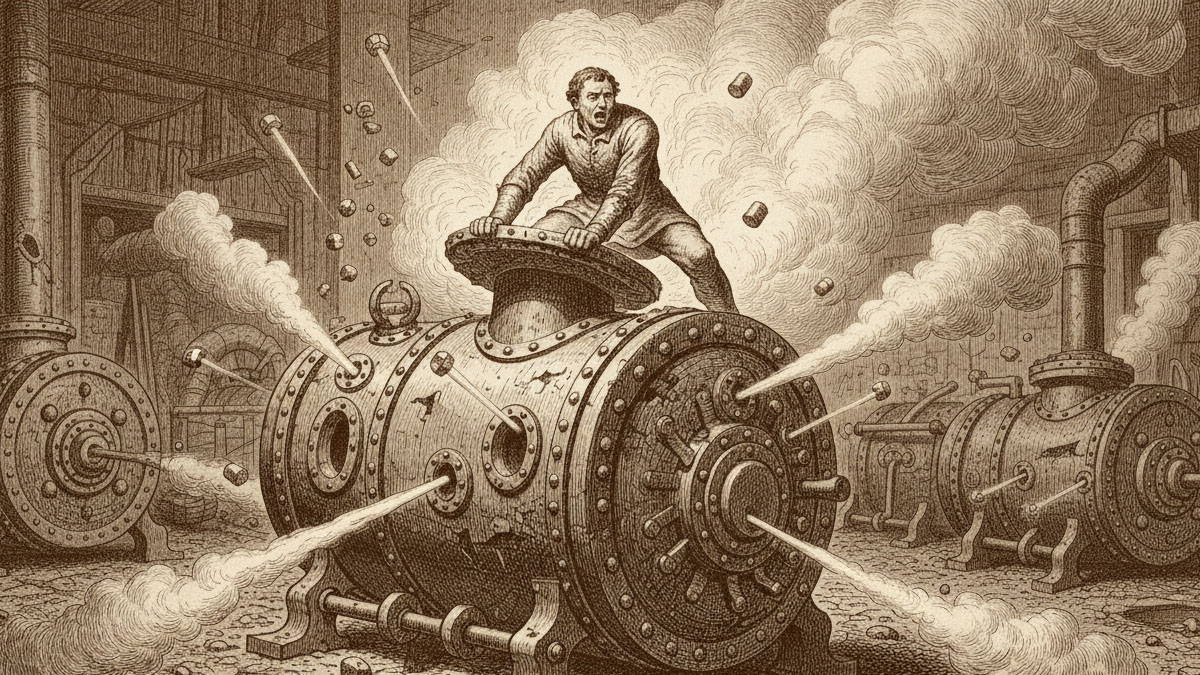
Engraving of an engineer at a mind control panel — a metaphor for a practical, technical approach to stress management

Have you ever caught yourself feeling like everything is technically fine, yet something inside feels… flat? No major crisis, but no lightness either. You wake up already tired, lose your temper in traffic, spiral over the news, and by evening you feel completely wrung out.

People tell you: 'Just rest,' 'Have a glass of wine,' 'Think positive.' And you know — it doesn't work.

It's like putting a piece of tape over the 'Check Engine' light on your dashboard.

The car keeps moving, but the problem hasn't gone anywhere.

In this article, we're setting aside mysticism, toxic positivity, and hollow advice. Instead, we'll explore an engineering approach (evidence-based methodology) to your mind. You'll understand the mechanics of stress, identify where your system is breaking down, and get a clear, actionable algorithm for stopping anxiety in its tracks and taking back control of your life.

What this article covers:

  • Why 99% of your exhaustion isn't caused by work — it's 'emotional noise.'
  • The physics of stress: how suppressed emotions damage the body (psychosomatics).
  • Why 'just think positive' advice is actually harmful.
  • A 3-step algorithm: how to stop a stress response in 10 seconds.

Emotional Noise and Burnout:
Why You Feel Tired All the Time

Engraving of a train passing a sleeping person — a metaphor for background emotional noise draining energy unnoticed

Imagine you live in a flat next to a railway line. The first week, the noise of passing trains keeps you awake. After a month, you adapt and tell your friends: 'I don't even hear it anymore.' But your body does. Your nervous system remains under constant strain, even when your mind has tuned it out.

The same thing happens with our inner life. We tend to reserve the word 'stress' for major upheavals — divorce, redundancy, illness. But the truth is, 99% of our stress is background 'emotional noise' that we've simply stopped noticing.

What does this noise consist of?

  • A flash of irritation when the Wi-Fi is slow.
  • A quiet dissatisfaction when you catch yourself in the mirror.
  • A sting of envy scrolling through social media.
  • A low-level, ever-present worry about money. (Why this feeling persists even on holiday — and how to tell a real problem from a system glitch — is explored in depth in our article Background Anxiety: Why You Can't Seem to Relax).
  • Restless boredom while waiting in a queue.

Each of these micro-reactions is like a pinch of dirt dropped into a glass of clean water. One pinch is barely noticeable. But if you add one every ten minutes, by evening the water in the glass — your consciousness — has turned cloudy.

We call this state the 'Negative Background.' It — not your job or your family — is the true source of your chronic exhaustion and apathy. You're burning an enormous amount of fuel simply by existing in this mode.

The Engineering Mindset for Mental Health:
A Practical Stress Framework

Your energy has no 'neutral' setting. You are either in Accumulation mode (joy, curiosity, calm) or in Depletion mode (anxiety, boredom, irritation). It is this constant oscillation between 'zero' and 'minus' that creates the feeling of instability. Read more about this mechanism in our article Emotional Rollercoaster: From Euphoria to Apathy.

Why Bottling Up Emotions Increases Anxiety and Chronic Stress

Engraving of a person holding down the lid of a boiling pot — a metaphor for the dangers of suppressing emotions

How were we taught to handle negative emotions? 'Pull yourself together,' 'Don't fall apart,' 'Rise above it.' We were taught suppression.

From a mechanics-of-the-mind perspective, suppression is like shutting the door on a room that's on fire. The fire hasn't gone out — it's simply raging behind a closed door, burning through oxygen (your energy) and heating the walls (your body).

What happens when you suppress an emotion?

  1. Preservation:
    The emotion doesn't disappear. It settles into the body as physical tension — a clenched jaw, raised shoulders, a lump in the throat — and manifests as psychosomatic symptoms.
  2. Explosion or Corrosion:
    Sooner or later, the pressure becomes critical. Either it erupts — or it corrodes, slowly eroding your health from within. Your body begins paying for suppressed emotions with its own resources. (For a deeper look at how this plays out physically, read our article Emotional Burnout and Chronic Fatigue: Where Does Your Energy Go?).
  3. Self-Deception:
    You paste on a smile while feeling hollow inside. This internal conflict consumes even more resources than the original emotion itself.

Toxic positivity ('Just focus on the good!') is another form of suppression — simply gift-wrapped. Trying to think happy thoughts when you're seething with anger is like painting over a rusted car body without sanding it down first. The paint will peel within the hour.

Stress Management Methods Compared:
What Actually Works vs What Fails

Why is 'keeping it together' actually dangerous? See the difference between suppressing emotions and truly resolving them.

Table: 'Suppressing Emotions (Old Method) vs. Resolving Emotions (Engineering Approach)'

Parameter
🛑 Suppression ('Just hold it together!')
⚙️ Engineering Resolution

Action

Clench your teeth and endure.

Acknowledge the emotion and redirect your attention.

What's happening inside

Pressure builds (cortisol accumulates).

Pressure drops (dominant state shifts).

Consequences

Psychosomatic illness, emotional outbursts, apathy.

Energy and health preserved.

Energy cost

Ongoing (maintaining the mask).

One-off (the moment of redirection).

Metaphor

Holding the lid down on a boiling pot.

Taking the pot off the heat entirely.

The Stress Response Explained:
How Your Brain and Body Drain Energy

To learn to drive a car, you need to know which pedal is the accelerator and which is the brake. To manage your inner state, you need to understand how emotions actually arise.

We're used to thinking in terms of:
Event → Emotion
('He insulted me → I felt hurt').

It seems as though emotions simply happen to us — that we're at the mercy of circumstances. But the engineering approach reveals a hidden link in this chain:

Event → [INTERPRETATION] → Emotion

Between the rain outside your window and your low mood lies a layer — your thought that 'rain is bad.' A farmer in the middle of a drought looks at the same rain and feels relief. The event is neutral. The emotional charge is something you create.

Two Survival Strategies:
Fight and Flight

All of our negative reactions are ancient survival programmes.

  1. Fight (Attack):
    Anger, irritation, resentment. If you frequently snap at the people closest to you and then regret it, read our guide Anger Outbursts: How to Put on the Brakes in 3 Seconds.
  2. Flight or Freeze:
    Fear, anxiety, apathy, self-pity. Energy collapses inward as the system tries to hide.

The problem is that there are no sabre-toothed tigers in the modern world. Yet we trigger these energy-intensive 'emergency modes' in response to an email from our manager or a disapproving glance on the tube. We're burning rocket fuel to warm a cup of tea.

The science behind it:

What we call 'Emotional Noise' is known in neuroscience as Allostatic Load.

  • When you're running from a tiger, cortisol saves your life.
  • When you're anxious about your broadband speed, cortisol goes unused by your muscles and begins damaging the hippocampus (your memory centre) and suppressing your immune system.

This is also linked to the Default Mode Network (DMN). When you're 'doing nothing,' your brain consumes 20% of the body's total energy — largely by replaying anxious thoughts on a loop. Our 'Resolution' method is a way of deliberately switching the DMN off.

Common Anxiety Thinking Traps:
“I’m Just Built This Way” and Other Myths

Sabre-toothed tiger engraving in a modern office setting — a metaphor for the brain's outdated stress responses.

One of the greatest obstacles to inner peace is identifying yourself with your reactions.

  • 'I'm a hot-headed person.'
  • 'I'm naturally anxious.'

When you say these things, you're drawing an equals sign: I = My Emotion. That's a fundamental error.
Imagine you've spent your whole life slouching. Does that make you a 'crooked person'? No. It means you've developed a habit of poor posture. And habits can be changed with practice.

  • A short temper is a habit of responding with anger.
  • Touchiness is a habit of interpreting other people's words as attacks.
  • Anxiety is a habit of scripting the future in a negative light.

The moment you realise that negativity isn't who you are — it's an automatic programme running in the background, you gain access to the controls. You can stop being an NPC (a non-player character) in your own life and become the one holding the controller.

What science says:

'Stress is not what happens to you, but how you respond to it.'

Hans Selye, endocrinologist, Nobel Prize nominee, and founding father of stress theory.

We have simply translated this biological truth into the language of practical, engineered techniques.

Anxiety Self-Test:
Signs You Need a Nervous System Reset

Checklist: 'System Audit':

Tick any of the following that have happened to you in the past week:

  • You wake up exhausted, even after a full eight hours of sleep.
  • Everyday sounds irritate you — chewing, loud laughter, notification pings.
  • You constantly jiggle your leg or fidget with something when you sit down.
  • You can't simply sit and stare out of the window for five minutes — your hand automatically reaches for your phone.
  • After work, you have no energy left for hobbies — only enough to watch a TV series.

If you ticked more than two, your system is running on emergency power. The guide below is written for you.

3-Step Stress Reset:
How to Calm Anxiety in 10 Seconds

Engraving of a railway switchman redirecting a train onto a new track — a metaphor for consciously redirecting attention.

We're not going to fight the darkness. We're simply going to turn on the light. The 'Consciousness Workshop' methodology is built on the principle of Elimination, not suppression. It's a practical skill — the ability to consciously redirect your attention.

Step 1. Stress diagnosis: How to detect hidden negativity

You can't manage what you don't notice. Your first task is to catch the exact moment you slip into a negative state.

  • Exercise: Pause right now for ten seconds.
  • Ask yourself: 'Am I feeling completely light and at ease right now? Or is there some kind of background noise?'
  • If there's any tension, irritation, or a sense of rushing — you've found the bug.

Step 2. The 'Stop' technique: Breaking the neural loop

The moment you notice a negative emotion, don't start thinking it through ('Why am I angry? Who's in the wrong here?'). That's a trap. Analysing the emotion only feeds it.

  • Firmly say to yourself: 'Stop. I don't want to feel this. It's poison, and it's poisoning me.'
  • Acknowledge that right now you are in energy-draining mode.

Step 3. The switch (Turning on the light)

You need a 'Joy Anchor' — a thought or mental image that reliably brings you even a small, genuine sense of pleasure.

  • It could be a holiday memory, the face of your pet, or the anticipation of a delicious dinner.
  • Action: By a deliberate act of will, shift the spotlight of your attention from the problem to your Anchor. Hold it there for 10–15 seconds until you feel a physical sense of relaxation.

Important:

You are not ignoring the problem. You are bringing your instrument (your mind) back into working order. Trying to solve a problem from a place of anger is inefficient. Solving it from a place of calm is what professionals do.

Advanced Nervous System Regulation:
The “Energy Architecture” Model

Mastering the basics of elimination is like learning to ride a bike without falling off. But to win the race, you need a far deeper level of fine-tuning. The full training programme covers layers that are simply not accessible to beginners without the right foundation.

Here's what separates a Master of conscious awareness from a beginner:

  1. Working with 'root' emotions (The 'Storm' Method).
    Everyone carries deep-seated resentments or chronic fears that simple redirection won't touch. For these, there are specialised protocols for dismantling the neural connections that keep them alive — turning a trigger into nothing more than background noise.
  2. Closing your energy leaks.
    You can work hard to build up energy, but if your bucket has holes in it, you'll always feel empty. We audit the physical sources of drainage: sleep quality (not just duration), eating habits (no diets — just an understanding of biochemistry), and even sexual energy, which most people unknowingly waste.
  3. A life strategy.
    Stopping the anxiety is just the beginning (Freedom FROM). The next step is understanding what you actually want (Freedom FOR). This is about designing a life where your true desires are fulfilled — without forcing yourself into someone else's mould.

The full protocols for these techniques — including work with psychosomatics and lucid dreaming — are available within the modules of the 'Consciousness Workshop' course. But every journey begins with the foundation.

What to Do When You’re Anxious Right Now:
Start Here

You don't build a house starting from the roof. You need a foundation. Right now, you can take the first step for free.

I've opened access to Level 1: "Diagnosis: The Invisible Poison".
There, we don't just talk theory — we work through practical exercises so you can see your own 'negative background' for yourself.

Stop waiting for life to calm down on its own. Become the engineer of your own inner state.

Stress and Anxiety FAQ:
Symptoms, Causes, and Quick Solutions

That's a myth. Fear is useful if a tiger is actually charging at you. But fear of public speaking or anxiety about the economy doesn't protect you — it paralyses you. A calm, clear mind will always assess a genuine threat faster and more accurately than a panicking one. We replace fear with measured awareness and clear-headed thinking.