How to Let Go of Resentment Toward Parents Without Forgiving

Author: Alex Guru | Reading time: 6 minutes

Engraving of a person drinking poison while gazing at portraits of their parents — a metaphor for resentment as self-destruction.

Resentment towards parents is not simply 'bad memories'. It is an active, destructive programme running silently in the background of your mind, 24/7. It shapes how much money you earn, how you relate to others, and even your physical health — often manifesting as a chronic lump in the throat caused by stress.

Traditional psychology and spiritual teachings tend to offer the same solution: 'Forgive them.' You are told: 'Try to understand — they had a hard life too', 'Write a forgiveness letter', 'Let it go.' So you try. You cry, write letters, meditate. You feel lighter... for about a week. Then one phone call from your mother, or one cutting remark from your father, and you are right back to feeling like a wounded five-year-old.

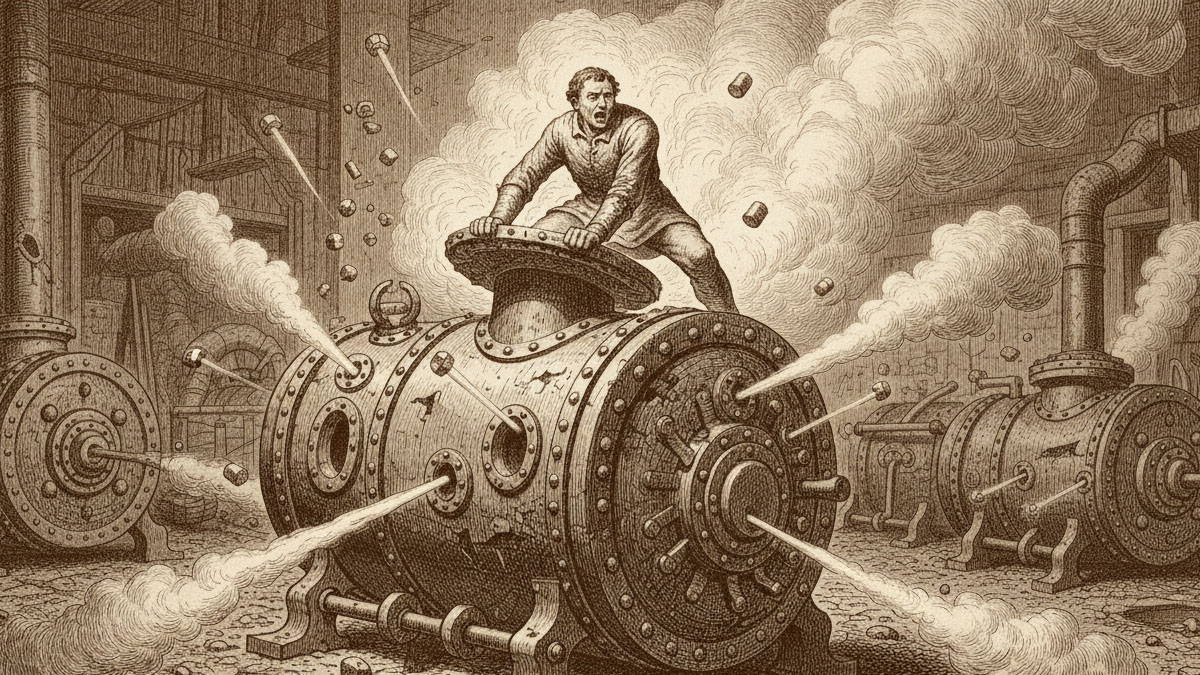
Why does this keep happening? Because 'forgiveness', as it is commonly understood, is nothing more than slapping a plaster over a rotting foundation.

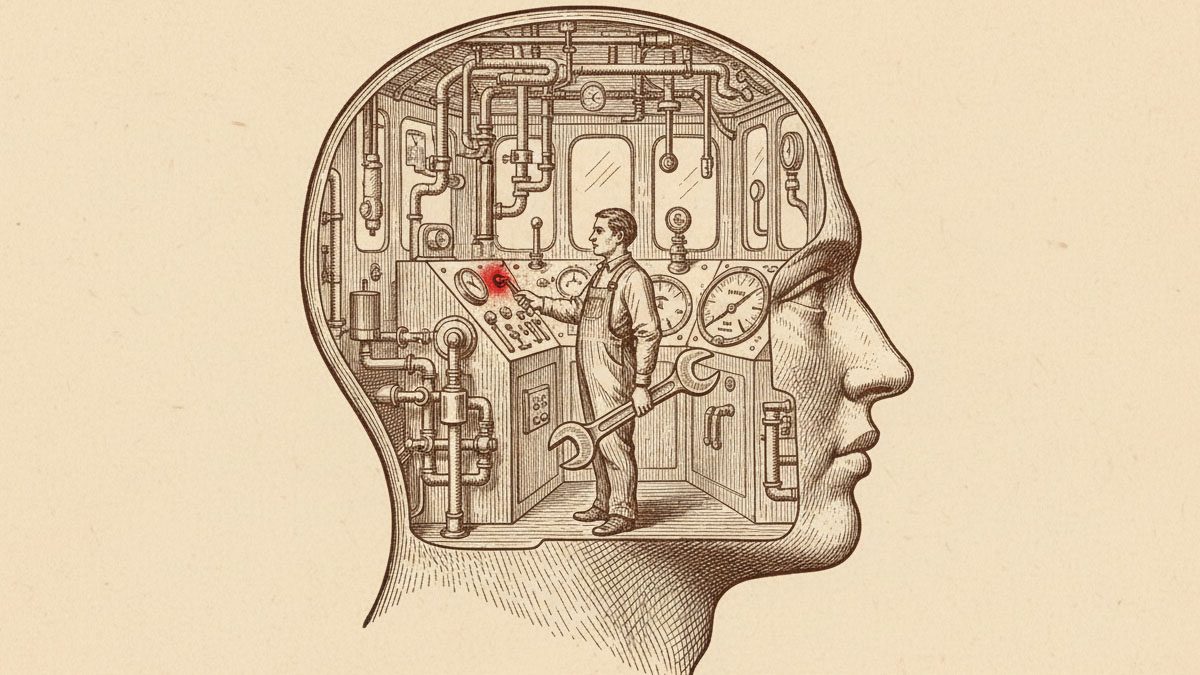
As someone who thinks like an engineer, I want to offer a different approach. You do not need to become a saint and forgive everyone. You need to fix the systemic fault that keeps you drinking poison while waiting for someone else to suffer.

In this article, we will examine the mechanics of childhood trauma in adult life and replace the ineffective ritual of 'forgiveness' with a practical technology of 'Resolution'. This article is written from the perspective of Family Systems Engineering — so you will find no moralising ('honour thy father and mother') and no mysticism ('pray for forgiveness'). You will come to understand that resentment is not a feeling — it is an incomplete separation (an unbroken attachment).

Expert opinion:

'Morality demands that we respect our parents. But the body and soul cannot respect someone who destroys them. Forced "forgiveness" is a betrayal of the self. Healing begins with the right to be angry.'

Alice Miller, psychologist, leading advocate for 'wounded children', author of The Drama of the Gifted Child.

Why Forced Forgiveness Backfires:
The Psychology of Parental Resentment

Engraving of a person plastering over a crack in a foundation — a metaphor for surface-level forgiveness without addressing the root cause.

When you attempt to 'forgive' your parents, you are subtly maintaining the position of a Victim — one who magnanimously absolves their Persecutors.

1. You preserve the power hierarchy:

'They wronged me, but I, being so spiritually evolved, choose to forgive them.' This feeds your ego, but it does not heal the pain.

2. You do not change the underlying reaction:

You are treating the symptom (resentment), not the cause (your expectation of who your parents should be).

The result? Resentment towards your mother or father simply gets buried deeper. This is a textbook case of emotional suppression — it creates the illusion of peace while continuing to erode you from within.

Signs You’re Still Emotionally Enmeshed With Your Parents (Not Fully Independent Yet)

Engraving of an adult lying in a child's cradle — a metaphor for psychological immaturity and emotional dependence on parents.

If your parents' words or actions still trigger a strong emotional reaction in you — anger, tears, the urge to prove yourself — then psychological separation from your parents has not yet taken place. Technically, you are an adult. Psychologically, you are a dependent child, demanding that the 'grown-ups' behave properly.

This fault is known as Externalising Responsibility (explored in depth in the lesson).
You believe that their behaviour is the source of your pain.

  • 'Mum called and criticised me → I feel hurt.'
  • Conclusion: 'Mum is toxic.'

The Engineer's View:

  • Your mother produced sounds (words).
  • Your brain compared those words against your expectation ('Mum should be supportive'). This is the same 'Fantasy Trap' that causes suffering in romantic relationships — we demand that a real person match the ideal version we have built in our minds.
  • It detected a mismatch.
  • Your brain (not your mother!) released a cocktail of stress hormones — what we experience as resentment.

As long as you believe the source of your pain is outside yourself, you are powerless.

Age Regression (Psychology) — explains why a successful business owner can feel like a small child the moment they walk through their parents' front door. This is not weakness; it is a memory glitch.

Why do you lose your voice around your parents?

It comes down to memory anchors. The family home is one of the most powerful 'Joy Anchors' that exist.

  • Familiar smells, sounds, and the voices of your parents reactivate old neural pathways formed when you were five years old.
  • The brain switches into 'Child Mode' (compliance or rebellion). Your adult self (the neocortex) temporarily goes offline.

The goal:
To maintain your adult perspective — the Observer — even in the midst of contact with your parents.

Victim vs Adult Mindset:
Stop Seeking Approval and Start Setting Boundaries

The table below shows the difference between a 'spiritual ritual' and actually growing up.

Table: 'Forgiveness vs Separation'

Parameter
🙏 Forgiveness (Ritual)
✂️ Separation (Engineering)

Position

Top-down ('I generously forgive those who wronged me').

Peer-to-peer ('We are simply two adults').

Expectations

Remain intact ('Now they will finally understand and appreciate me').

Dissolved ('They won't change — and that's okay').

Emotions

Suppressed anger concealed beneath a layer of 'spirituality'.

Neutrality / Quiet acceptance.

Outcome

Resentment resurfaces at the next conflict.

Nothing they do can touch you anymore.

How to Handle Toxic Parents:
Boundaries, Low Contact, and Self-Protection

Engraving of a person demanding the impossible from an old machine — a metaphor for unrealistic expectations placed on parents.

The question of 'how to cope with toxic parents' is not solved by cutting and running or by confrontation — it is solved by updating your own internal operating system.

You need to stop waiting for them to change. Your parents are fully formed systems. They run on old programming — old fears, old conditioning, their own unresolved wounds. Expecting them to behave differently is like demanding that an old black-and-white television stream YouTube in 4K. It is not their fault; it is simply their technical limitation.

Your strategy is not to re-educate them — it is Evacuation. Evacuating your own expectations.

A Step-by-Step Method to Release Anger and Heal Childhood Wounds

Engraving of a person demanding the impossible from an old machine — a metaphor for unrealistic expectations placed on parents.

Instead of forgiveness rituals, use the Resolution algorithm.

1. Acknowledge that you are poisoning yourself.

In the moment of resentment, say to yourself: 'Right now, I am drinking poison. I am the one destroying myself — not them.' This puts the remote control back in your hands.

2. Remove the 'Should'.

Identify the hidden rule operating in your mind: 'Mum should be supportive', 'Dad should have protected me.' Recognise that this rule exists only in your head. Reality does not comply with it. Delete it like faulty code.

3. Apply the technique.

Use the method of 'Clean Resolution' or 'Generating Joy' to dissolve the tension of resentment at the neurological level — not suppress it, not rationalise it, but switch it off.

4. Create distance.

If contact with your parents is genuinely damaging you, increase the distance. This is not revenge — it is self-preservation. You have the right to step away from a source that is toxic to you.

The Technique:
'Device Specification Sheet'

Exercise: 'Technical Spec Sheet for Your Parent' — a concrete technique for lowering expectations.

Stop expecting a basic mobile phone to perform like a smartphone.

Write an honest specification sheet for your parent:

  • Model: 'Mother, Traditional, born 1960'.
  • Functions: Able to feed, able to worry, able to criticise.
  • Limitations: Unable to provide emotional support, unable to listen, unable to apologise.

Conclusion:
If you are expecting a feature from a device that simply does not have it — that is a user error, not a device fault.

  • 'Separation is impossible without firm Personal Boundaries. Sometimes "honouring your parents" means loving them from a safe distance.'
  • 'You are not resentful of your real parents — you are resentful that they do not match the idealised version you carry inside you. See the article Why We Fall in Love with Fantasies.'
  • 'Unexpressed resentment towards parents is one of the leading causes of the psychosomatic Lump in the Throat.'
  • 'Toxic parents often operate like Energy Vampires, using guilt as their primary tool.'

What Changes When You Take the Adult Position:
Peace, Confidence, and Freedom

When you stop carrying resentment — when you stop drinking the poison — genuine separation begins. You start to see your parents for what they truly are: ordinary people. Imperfect, ageing, shaped by their own fears and limitations.

You no longer need to forgive them, because you have stopped being angry with them. You simply accept them as they are — or calmly limit contact if that is what you need.

That is what freedom actually looks like.

Would you like to understand the mechanics of how we create our own suffering by placing responsibility for our feelings onto others — even when those others genuinely did behave badly?

Get to the root of the problem in the free Lesson: ''I've Been Hurt': How We Outsource Responsibility for Our Own Feelings.'

This is the first step towards leaving the 'wounded child' behind — and becoming a truly happy adult.