Self-Discipline Without Willpower:
The Energy Method That Lasts

Author: Alex Guru | Reading time: 7 minutes

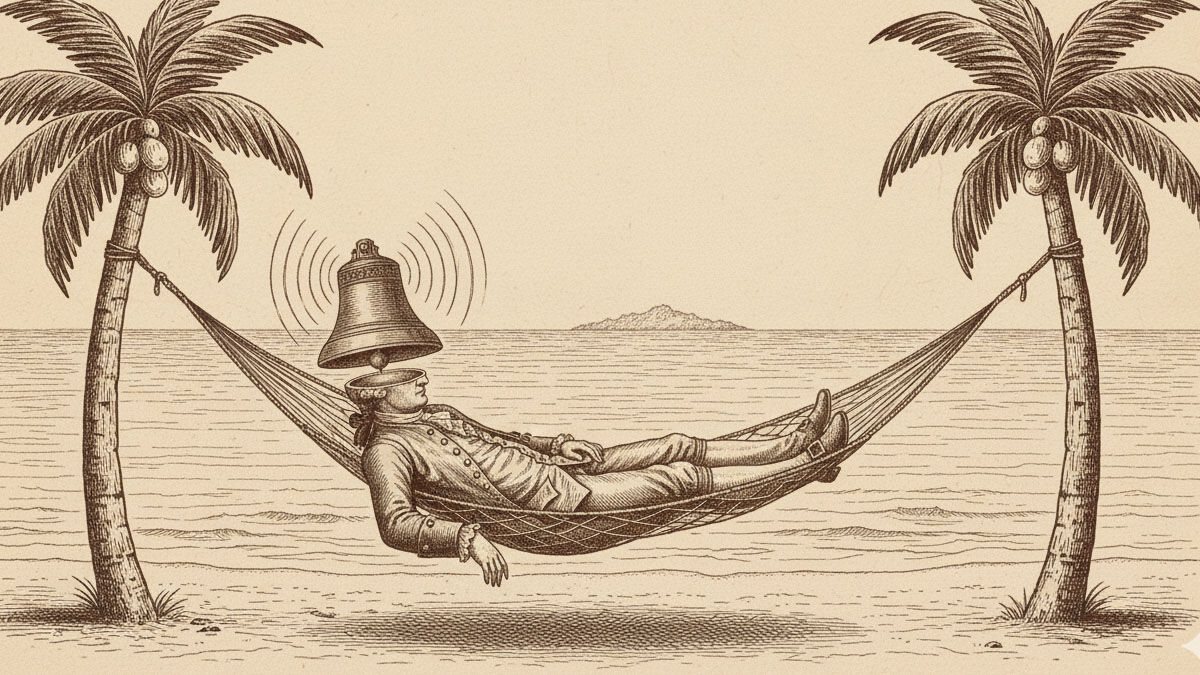
Engraving of a man pushing against a wall — metaphor for the futility of brute willpower without the right strategy.

Every Monday, millions of people decide to 'start fresh.' You write the perfect plan, promise yourself you'll go running in the mornings and finally learn that new skill. You grit your teeth, summon every ounce of willpower… and by Wednesday, it's all fallen apart. The plan ends up in the bin, and you're left with a lingering sense of guilt and one nagging question: 'What's wrong with me? Why can't I just stick to anything?'

You search online for how to build willpower and decide to push yourself even harder next time. But that only speeds up the next inevitable collapse.

From the perspective of mind engineering, the problem isn't weakness. The problem is that you're trying to run a car on water instead of petrol. Willpower is an emergency resource — not the everyday fuel your life runs on.

In this article, we'll explore why classic self-discipline fails in the long run, why you feel drained and can't get things done, and how the 'Battery Method' lets you reach your goals without burning yourself out.

Why Willpower Runs Out:
Your Brain’s Short-Term Motivation Fuel

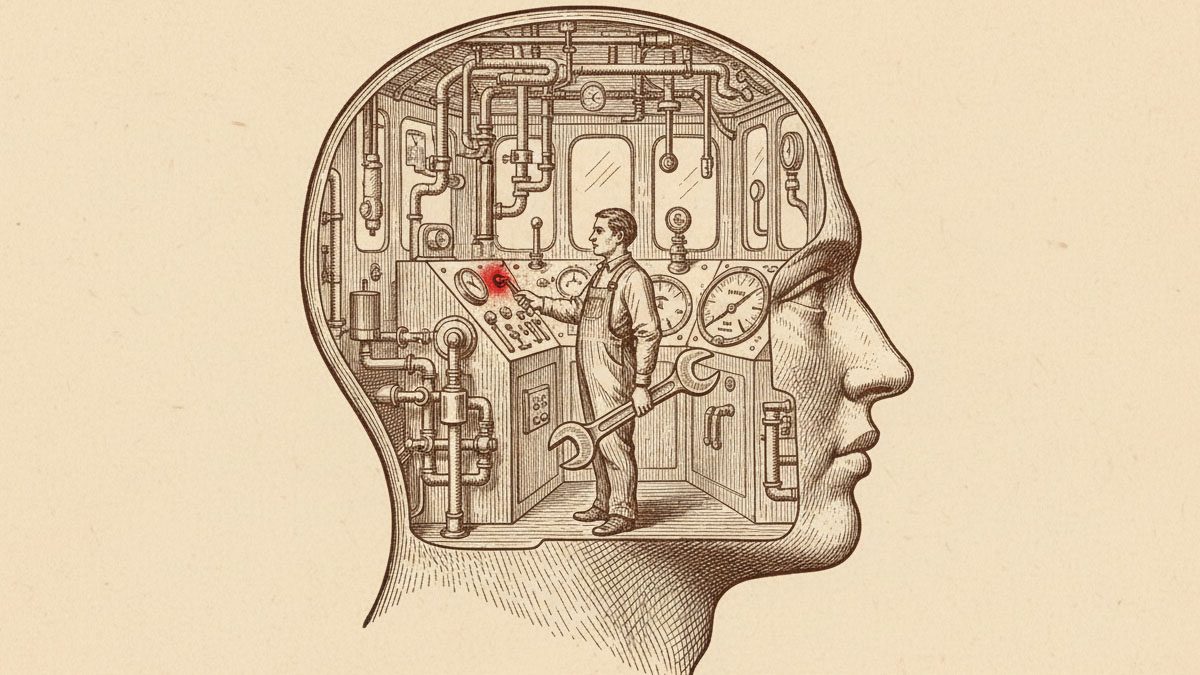
Engraving of a man cranking a hand-powered generator — metaphor for willpower as a limited and exhaustible resource.

Let's look at how your mind is actually structured.

Willpower (a function of the prefrontal cortex) is an expensive and finite resource. Think of it as a turbo boost — something you use for a critical sprint: escaping danger, or finishing a project an hour before the deadline.

Trying to build your entire life on willpower is like trying to light your whole house with a pocket torch when you're sitting on a full electrical grid. The batteries will die within a couple of hours.

When you force yourself to do something you resent ('I have to'), you're not spending energy on the task itself — you're spending it on fighting your own resistance. You're pressing the accelerator and the brake at the same time. The engine roars, the car goes nowhere, and the parts wear out fast. That's not discipline — it's self-destruction, and it leads directly to Emotional Burnout and Chronic Fatigue.

The biological proof that willpower runs out.

Why do you always cave in the evenings?

Psychologist Roy Baumeister demonstrated: self-control is a depletable resource that physically depends on glucose levels in the prefrontal cortex.

  • Every 'NO' (skipping the cake), every decision (what to wear), every suppressed emotion burns through your fuel reserves.
  • By evening, the tank is empty. The prefrontal cortex (the Brake) goes offline, and the limbic system (the Accelerator) takes over.
  • The takeaway: Breaking your diet at night isn't a moral failing. It's a flat battery in your impulse-control module.

Discipline Systems vs Motivation:
Think Like an Engineer, Not a Hero

Smart people don't rely on willpower — they rely on design.

Table: 'Willpower vs Environment Design'

Factor
🦸‍♂️ The Hero (Willpower)
🏗️ The Engineer (Environment Design)

Principle

Resisting temptation.

Removing temptation from sight entirely.

Energy cost

Enormous (constant battle).

Zero (no trigger, no battle).

Reliability

Low (depends on mood).

High (runs on autopilot).

Example (Diet)

Staring at the biscuits and white-knuckling it.

Not buying biscuits in the first place.

Result

Breaking down under stress.

Consistent, stable outcomes.

Hidden Energy Vampires:
Habits and People That Drain Mental Focus

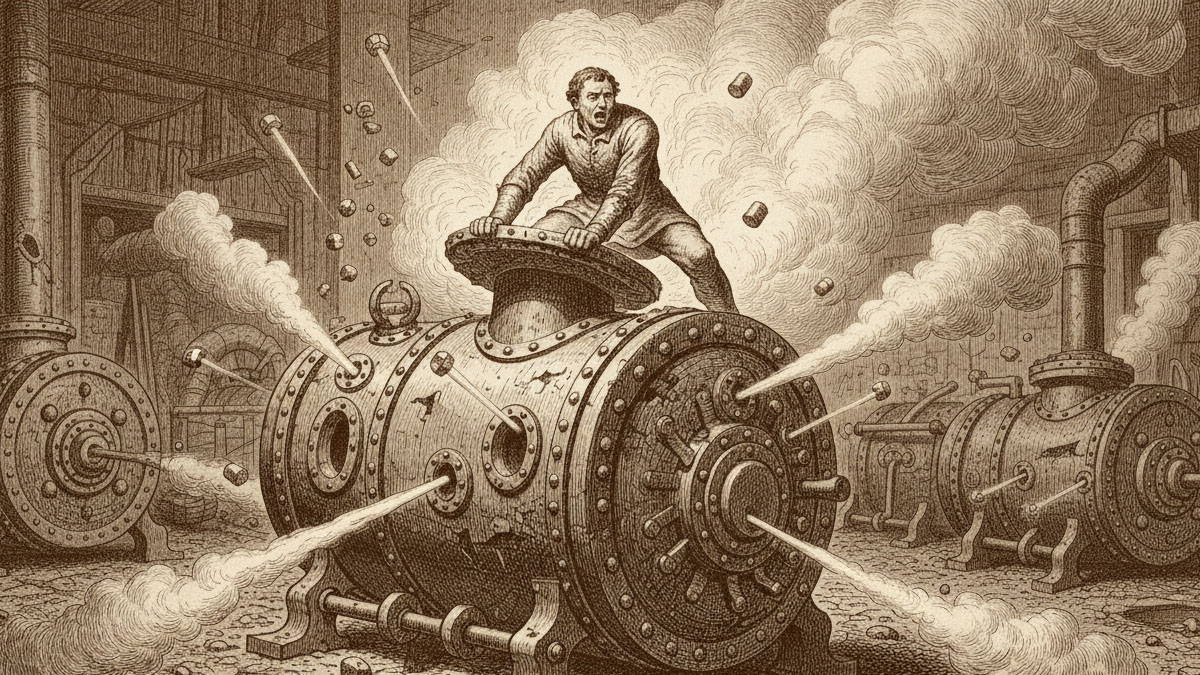
Comparison of a person under a yoke versus a person with wings — metaphor for 'have to' versus 'want to' motivation.

In Course 2 of our programme, we introduce a fundamental distinction between two types of motivation. Most people live in a state of chronic energy deficit because their to-do list is made up almost entirely of 'Energy Vampires.'

1. Energy Vampires ('I Have To')

These are goals driven by fear, obligation, or other people's expectations.

  • How to spot them:
    Just thinking about this task makes your shoulders feel heavy, your mind go blank, and your hand reach for your phone. (This is where what we mistakenly call laziness is born. Read more: Procrastination Isn't Laziness — It's Your Brain's Defence Mechanism).
  • How they work:
    These tasks consume energy without giving any back. They are a black hole.

2. Energy Batteries ('I Want To')

These are your genuine desires and true aspirations.

  • How to spot them:
    Just thinking about this task creates a sense of anticipation, curiosity, and a quiet buzz of excitement.
  • How they work:
    These tasks recharge you. You gain energy even before you start — simply by thinking about them.

Why Do You Feel Too Drained to Get Anything Done?

Because you're trying to build discipline on a foundation of Vampires. Your brain, like any rational investor, refuses to allocate resources to ventures that consistently run at a loss.

Expert Insight:

'People who appear to have strong self-control are not actually exercising more willpower. They've simply built lives in which they rarely need to use it. Disciplined people are those who have designed their environment better than anyone else.'

James Clear, author of Atomic Habits.

The Battery Method Explained:
Build Sustainable Discipline and Productivity

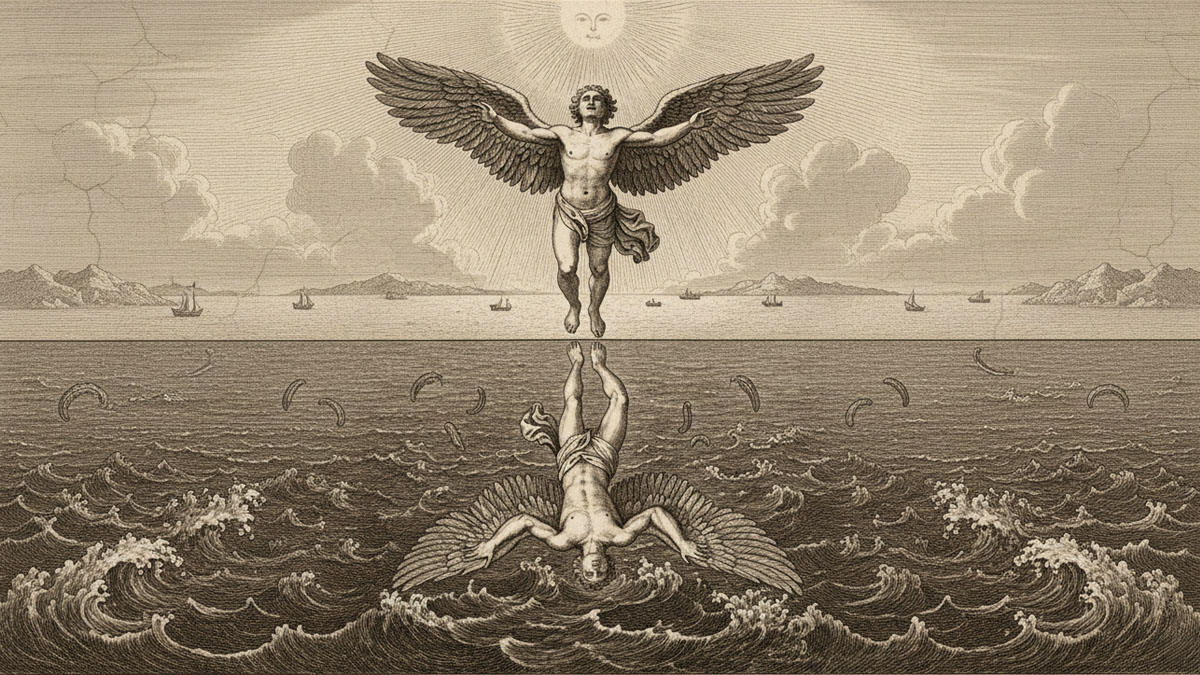
Engraving of scales balancing negative and positive weights — metaphor for balancing draining tasks with energising ones.

The real secrets of productivity lie not in rigid schedules, but in managing the type of fuel you run on. To build unbreakable discipline, you need to shift your motivation from 'I have to' to 'I want to.' This principle is at the heart of finding your own path, which we explore in depth in the guide How to Find Your Purpose and Start Taking Action.

Step 1. The Anticipation Test

Before you start any task, run a quick diagnostic. Close your eyes and picture yourself doing it. If something inside you tightens and contracts — it's a Vampire. If something opens up and feels warm — it's a Battery.

Step 2. Find the Power Source

If you're faced with an 'I have to' task (say, a tedious report), don't try to bulldoze through it with sheer will. Instead, find the Battery element hidden inside it.

  • Vampire framing:
    'I have to finish this report or I'll be in trouble.' (Fear).
  • Reframed as a Battery:
    'I want to knock this report out as quickly and cleanly as possible so I feel like a pro — and free up my evening for something I actually enjoy.' (Excitement and anticipation of a reward).

Step 3. Balance the System

You can't keep driving if the tank is empty. If 90% of your day is made up of Vampires, burnout is inevitable.

Adopt this rule: every Vampire must be paired with a Battery. Made an uncomfortable phone call? Immediately follow it with something that recharges you — put on a favourite song, make yourself a proper coffee, step outside for five minutes. This restores the balance.

Technique:
Temptation Bundling

The science-backed method from researcher Katy Milkman.

How do you make a boring task feel appealing? You pair it with dopamine.

How it works:

Allow yourself to enjoy a 'Battery activity' (something you genuinely love) only while doing a Vampire task.

  • Listen to your favourite podcast or audiobook -> Only while cleaning or running.
  • Enjoy that special, indulgent coffee -> Only when you sit down to work on the report.

Your brain starts looking forward to the report because it wants the coffee. You've hacked your own reward system.

To stop wasting willpower on decision-making, build yourself a set of algorithms.

Instead of 'I'll go running,' write the code:

  • IF (it's 7:00 am), THEN (I put on my trainers).
  • IF (I feel anger rising), THEN (I take 3 slow, deep breaths).

Once the algorithm is in place, your brain no longer needs to waste energy deciding 'should I run or not?' It simply executes the script.

  • 'Using willpower for work you hate is pointless. First, find your purpose by following the guide How to Find Your Life's Purpose.'
  • 'If willpower has stopped working entirely (total paralysis), check yourself for burnout in the article Laziness or Burnout.'
  • 'Willpower is the most costly resource in your Energy Budget. Spend it wisely.'
  • 'Without dopamine, willpower simply doesn't function. See the article Emotional Rollercoaster.'

How to Start Today:
A Simple First Step for Consistent Habits

Discipline is not about forcing yourself to suffer. Discipline is about organising your life so that your actions are fuelled by the energy of your true desires.

In the free Lesson "Battery Desires vs. Vampire Desires: How to Tell Your Own 'Want' from Someone Else's 'Should'" (Course 2) we explore in depth:

  • The key marker of a genuine desire (the Energy of Anticipation).
  • Why living by 'should' leads to apathy and physical burnout.
  • The 'Anticipation Test' practice to help you sort through your goals and cut through the noise.

Stop forcing yourself to run on empty. Find the fuel that moves you forward — naturally, without needing a push.