How to Stop Living in Your Head and Feel Again

Author: Alex Guru | Reading time: 7 minutes

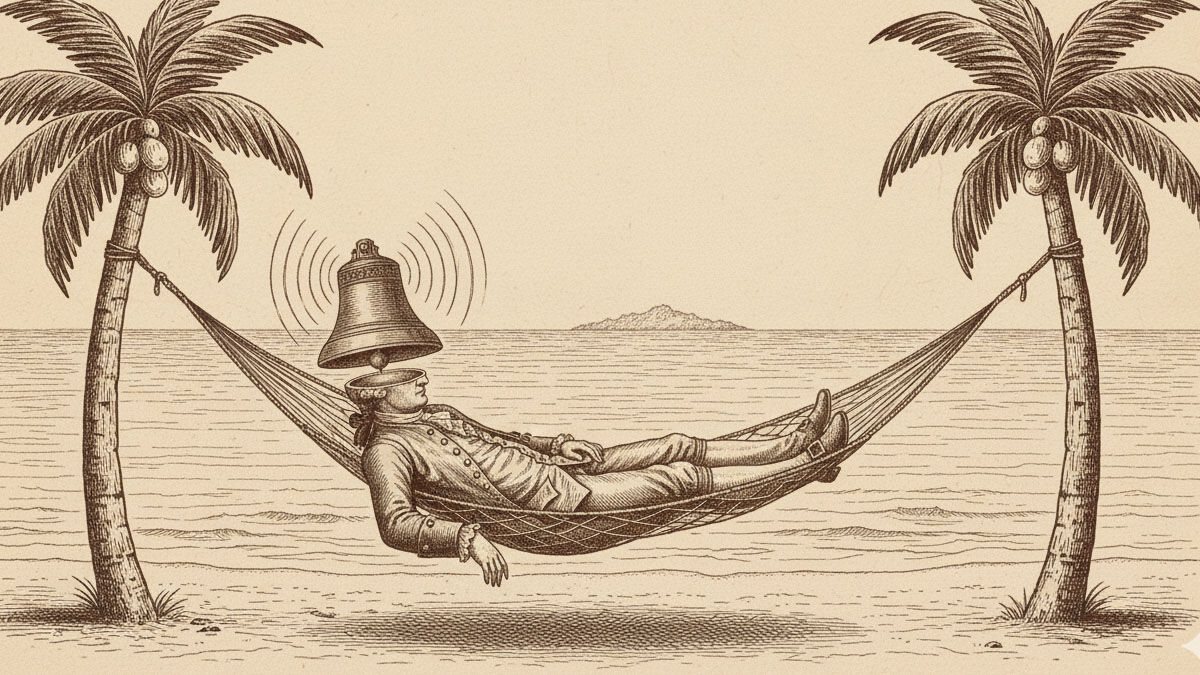
Engraving of a head floating above a body — a metaphor for living in your head and dissociation from bodily sensations.

You can spend hours writing code, crunching spreadsheets, or scrolling through feeds — completely unaware of how you're sitting. You only remember to eat when your stomach starts aching. You walk into doorframes because you've lost all sense of where your body is in space.

To you, your body is little more than a taxi for your brain. A biological life-support suit whose only job is to transport your brilliant mind from the meeting room to the bedroom.

If any of that sounds familiar, you're operating in a state of body dissociation. It's an occupational hazard for developers, entrepreneurs, and high-performing intellectuals. The problem isn't that you're clumsy. The problem is that by switching your body off, you've also switched off your ability to feel joy.

In this article, we'll break down the mechanics of body awareness, explain why living 'in your head' leaves you emotionally numb, and give you a practical reconnection protocol.

Why You Feel Numb:
Body Disconnection, Anhedonia, and Lost Joy

From an engineering perspective, a human being is a system made up of sensors (the body) and a processor (the brain).

If you're a 'head person,' you've redirected all available energy to the processor. You live in an abstract world of ideas, plans, and numbers. The communication channel to your sensors has been severed — or is running at 1% capacity, only picking up acute pain signals.

What happens when you lose bodily sensitivity?

You lose your sense of taste for life. Literally.
The reason is simple: emotions are physical experiences.

  • Joy is an expansion in the chest and a spreading warmth.
  • Excitement is a buzz and vibration in your limbs.
  • Pleasure is the release of muscle tension.
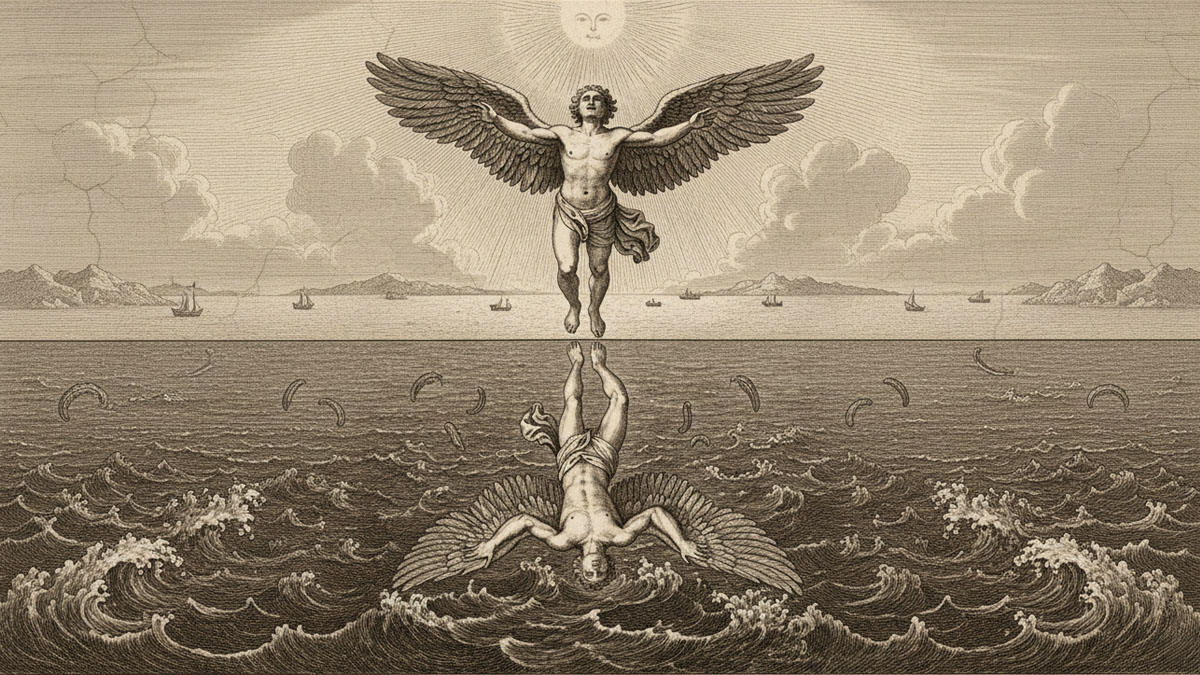
Engraving of a mechanical human figure devoid of emotion — a metaphor for anhedonia and the loss of the ability to feel joy.

If you can't feel your body, you can't feel your emotions. You might intellectually register that you 'should be happy' — but physically, all you experience is a kind of grey numbness. This condition is often called anhedonia (the 'grey life' syndrome), and its root cause is precisely this disconnection from your body's sensory signals. You become a biological machine that understands everything — and feels nothing.

The condition in which a person cannot identify or name their own emotions is called Alexithymia (literally: 'no words for feelings').

It isn't the same as being cold or unfeeling. The body is flooded with hormonal signals — but the brain simply cannot decode them.

The risk:
People with alexithymia are three times more likely to develop psychosomatic illness, because they consistently miss the body's 'Stop' signals until it's too late.

Body Awareness Test:
Are You Present in Your Body or Autopilot

Table: 'Dissociation vs. Body Awareness'

Parameter
🤖 Dissociation ('Living in Your Head')
🧘 Body Awareness ('Living in Your Body')

Response to stress

'I don't feel anything' (Shutdown/freeze).

'I feel tightness in my stomach.'

Appetite

You forget to eat, or mindlessly overeat.

You taste your food and notice when you're full.

Coordination

You clip corners and drop things (proprioception issues).

You move with precision and ease.

Emotions

'I think I'm happy' (Logic).

'I feel warmth spreading through me' (Sensation).

Outcome

Rapid burnout (you didn't notice the fatigue building).

You rest before you hit empty.

The Hidden Mistake:
Using Your Body Like a Machine, Not a Home

Engraving of a chariot of reason being pulled by an exhausted donkey — a metaphor for ignoring and overworking the body.

The deep-seated belief driving this problem is: 'The body is primitive and animal. What matters is the intellect.'

You treat your body like a stubborn pack mule — something to be fed occasionally and taken to the vet when it breaks down. But this 'mule' is smarter than you give it credit for. When you ignore it long enough, it starts screaming through illness. (Read our article Psychosomatics: What Your Body Is Desperately Trying to Tell You to learn to understand that language.)
This is a fundamental system error. Your body is not a vehicle. It's a resonator. It is the only instrument through which you can interact with reality. Disconnect from it, and you end up sealed inside a vacuum of your own mental projections.

Neuroscientist Antonio Damasio demonstrated that 'pure reason' simply does not exist.

In moments of decision-making, the brain relies on Somatic Markers — micro-sensations in the body (a gut flutter, a sudden chill, a sinking feeling).

If you've disconnected from your body, you've lost access to this database entirely. You're forced to calculate every decision step by logical step — which overloads the processor and dramatically increases the likelihood of poor choices.

Sensation Inventory:
A Simple Somatic Mindfulness Exercise to Reconnect

You don't need elaborate esoteric grounding exercises. What you need is to rebuild the neural connection. This works faster than traditional meditation. (If meditation has never clicked for you, find out why it doesn't work for high-action people in our dedicated article.)

In Course 5, 'The Language of the Body,' we teach you to distinguish between two types of signals: Discomfort Signals and Pleasure Signals. Most people, even when they do check in with their body, only scan for problems (where does it hurt?). We take a different approach.

Engraving of a cartographer mapping sensation points onto a body outline — a metaphor for inventorying bodily signals.

The Reconnection Protocol:

  1. Pause the frame.
    Right now, as you read this, stop. Don't change your position.
  2. Find the 'Bug' (Discomfort).
    Scan your body. Where is there tension? What feels uncomfortable? (Shoulders raised? Jaw clenched? Eyes strained?) Simply notice it. This is the background 'noise' you've been tuning out for years.
  3. Find the 'Resource' (Pleasure).
    Now for the harder part. Find one spot in your body that feels good.

It might be something barely noticeable:

  • The warmth of a mug in your hand.
  • The softness of your jumper against your skin.
  • The solid feeling of the floor beneath your feet.
  • Simply a relaxed, unclenched hand.

Your task:

Find that faint signal of pleasure and hold your attention on it for 10–15 seconds — as if you're slowly turning up the volume.

This exercise shifts your brain out of 'abstract thinking' mode and into 'direct experience' mode. You come back from the virtual world into the real one.

Technique:
'Circuit Check' (Proprioception Reset)

Practice: 'Proprioceptive Reset' (Biohack) — a more direct, physical technique for returning to your body.

For the brain to 'see' the body, you need to send it a strong signal from the muscles and joints.

  • Compression: Firmly squeeze your forearms, calves, and thighs with your hands. Then pat your whole body briskly with open palms.
  • Weight: Stand up and stamp your heels hard on the floor. Feel the vibration travel through your bones.
  • Pressure: Place both hands against a wall and push with full force for 10 seconds.

This instantly snaps a 'head person' back into physical reality.

  • 'Losing contact with your body is the primary reason you miss the early warning signs of Emotional Burnout — until you suddenly collapse with nothing left in the tank.'
  • 'If trying to "feel your body" triggers anxiety, start with movement-based practices — see our article on Mindfulness Techniques for Active People.'
  • 'Ignoring signals from your gut means you only notice the problem once it has escalated to Stress-Induced Gastritis.'

Quick Start:
5 Minutes to Rebuild Interoception and Feel More Alive

Living 'in your head' feels safe — but it's a muted, colourless existence. Real energy, drive, and pleasure live one floor down, in your body. But somewhere along the way you locked that door and lost the key.

In the free Lesson 'The Two Languages of Your Body: Discomfort Signals and Pleasure Signals' we give you the complete map of that territory.
You'll discover:

  • Why we've gone deaf to the language of pleasure.
  • How your body can become a source of energy rather than a source of problems.
  • The 'Body Scan' practice that will restore your sensitivity.

Stop being a ghost in the machine. It's time to move back into your own home.