How to Find Inner Peace Without Escaping Your Life

Author: Alex Guru | Reading time: 7 minutes

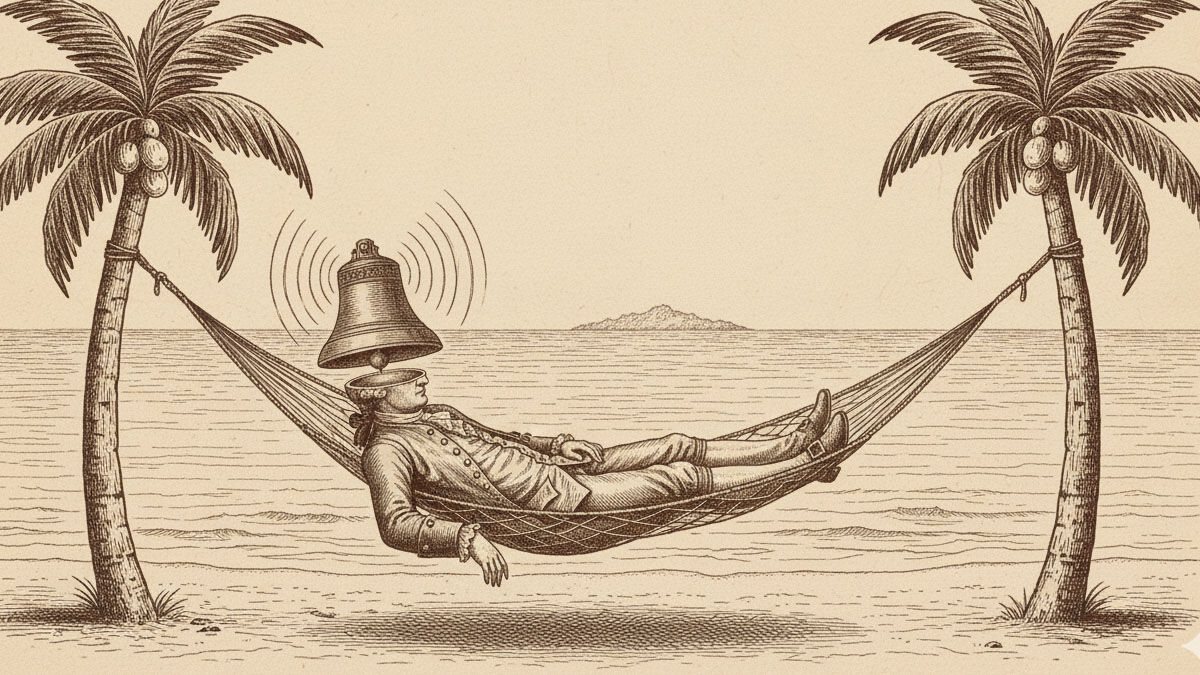
Engraving of a person meditating in paradise while suffering from mental noise — metaphor for the impossibility of escaping inner turmoil

We tend to think of peace as a place on a map. Somewhere out there — on a mountaintop, in a Balinese ashram, or a monk's cell — our minds will finally go quiet. So we save up, book time off, and flee civilisation in search of a 'reset'.

But more often than not, the opposite happens. You're sitting in lotus pose with a view of the ocean, and your boss is still yelling in your head, your child is still crying, and the news feed is still buzzing. The scenery has changed, but the cast of characters — your thoughts — remains exactly the same.

As a specialist in the mechanics of the human mind, I'll tell you plainly: inner silence has nothing to do with the decibel level around you. It's an operating mode of your consciousness. If you can't access it on the subway, you won't find it in the Himalayas either.

In this article, we'll explore why running away from reality doesn't work — and how to create a home retreat without buying a plane ticket. You'll discover that a retreat isn't a 'spiritual journey'; it's sensory deprivation and a neurochemical reset. And that retreating to the woods simply removes external noise — but the 'static' is generated by the processor itself (your brain).

Axiom:

'All of humanity's problems stem from man's inability to sit quietly in a room alone.'

Blaise Pascal, mathematician and philosopher.

Why Silence Can Feel So Loud:
The Inner Noise Problem

You've escaped to silence. No external distractions. And that's when it gets brutal.

In everyday life, city noise, work, and screens drown out your inner hum. When external stimulation disappears, the volume of your Negative Background — your anxiety and unresolved grievances — gets cranked up to maximum. This is precisely why silence often makes us feel worse, not better (you can read more about this phenomenon in the article on Background Anxiety).

Instead of enlightenment, you get a panic attack or overwhelming boredom. You start counting the minutes until the retreat ends. And you realise something uncomfortable: you can't run away from yourself.

The culprit: the Default Mode Network (DMN) — the brain's resting-state network. This is the key scientific reason (identified by neuroscientist Marcus Raichle) why you can't escape yourself.

  • The DMN activates when you are not focused on any task.
  • Its function is to drift through time (past and future) and engage in self-referential thinking.

The paradox:
The fewer external demands there are (say, you're sitting in a cave), the more intensely the DMN fires. The noise in your head isn't mystical — it's your neural network running at idle.

Conclusion:
To find genuine silence, you don't just need to 'sit down' — you need to switch off the DMN through specific techniques (focused concentration).

Escapism vs Healing:
Are You Avoiding or Moving Forward

The table below shows the difference between 'escape' (escapism) and genuine inner work.

Table: Destination Retreat vs Inner Retreat.

Parameter
✈️ Spiritual Tourism (Escape)
🧘 Inner Retreat (The Real Work)

Location

Bali, the mountains, a monastery.

Your kitchen / The commute / Your office.

Requirement

Perfect external silence.

Any conditions (noise is irrelevant).

Tool

Changing the scenery (external).

Shifting your focus (internal).

Result

Temporary relief that fades the moment you get home.

A lasting skill (your personal 'spacesuit').

Cost

$2,000 + flights.

$0 + willpower.

Where Mental Noise Comes From:
Anxiety, Rumination, and the DMN

Engraving of a broken cart on a smooth road — metaphor for the futility of changing external conditions when the problem lies within

Let's look at this problem technically. Where does the noise actually come from?

  1. External circuit: 
    Sounds, people, information. This accounts for just 10% of the problem.
  2. Internal circuit: 
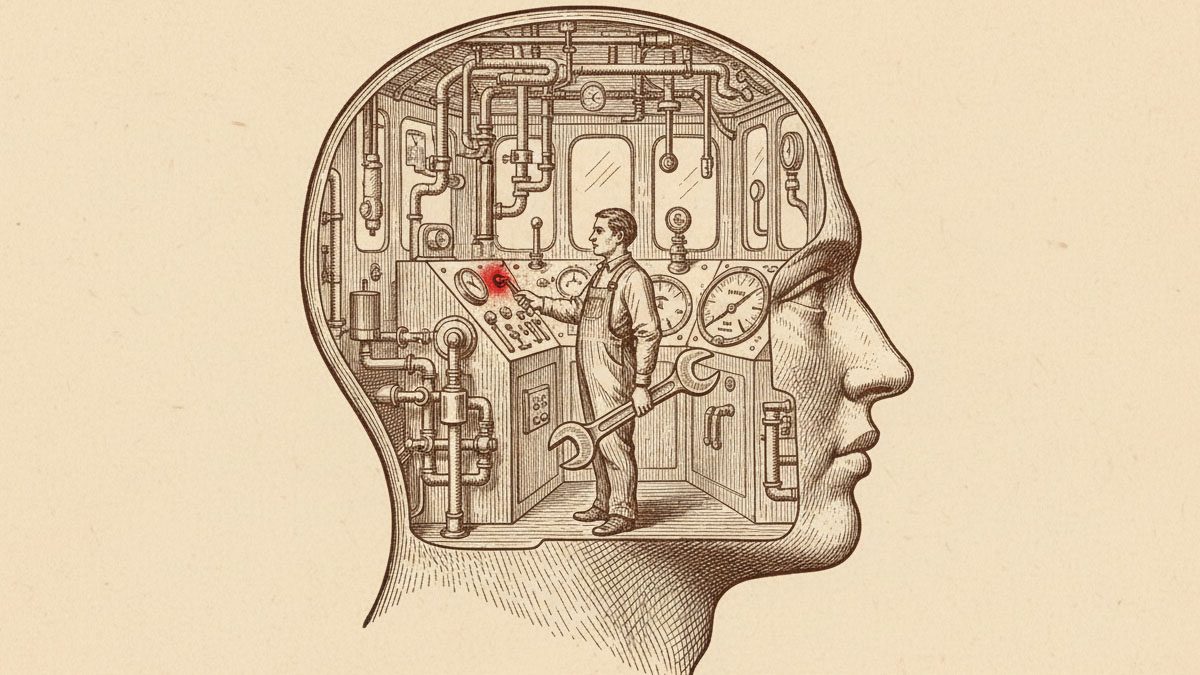
    Your 'Autopilot', which generates an endless 'mental chatter loop'. This is 90% of the noise.

Trying to find peace by changing your location is like trying to fix a knocking engine by resurfacing the road. The tarmac is smoother, but the knock is still there.

Silence practices are not about finding a quiet place. They are the skill of deliberately switching off your internal noise generator. They are the 'Mute' button inside your own head.

Why External Conditions Don’t Create Calm:
The Retreat Trap

Engraving of a person inside a house of cards in the wind — metaphor for fragile peace that depends entirely on external circumstances

The Core Misconception:

'I need perfect conditions before I can practise.'
This is the mindset of someone at the mercy of their circumstances. If your sense of calm depends on whether children are noisy next door or a neighbour is drilling, then you don't actually have calm. You simply have a temporary lull.

True mastery — and real freedom — begins the moment you become self-sufficient. You carry your silence with you, like a spacesuit.

The Inner Retreat Method:
A Practical Path to Calm and Clarity

Engraving of a deep-sea diver in a suit walking through a noisy city — metaphor for autonomous inner peace as a personal silence suit

You don't need to go away for a year. You need to learn how to create a 'pocket of stillness' right here, right now.

Here is the step-by-step method for running your own retreat using a structured, practical approach:

Step 1: Information Blackout
(External Circuit)

Before working on your mind, cut off the incoming signal.

  • Action:
    Set aside 4 hours (or a full weekend). Switch off your phone, internet, and television. Let the people around you know.
  • Goal:
    Stop the flow of new data and halt information overload, so your mental processor can begin working through what's already there.

Protocol:
Dopamine Detox (Monk Mode)

The biohack: 'Dopamine Detox' (Monk Mode) — a term that originated in Silicon Valley.

An inner retreat is, in essence, a dopamine tolerance reset.

When you cut off stimulants — social media, news, music — your brain gets bored.

  • The first 2 hours: withdrawal (restlessness, anxiety).
  • Hour 4: deprived of cheap dopamine hits, the brain begins looking for stimulation within.
  • This is the moment when access to 'quiet joy' opens up (serotonin).

Step 2: Stopping the Inner Dialogue
(Internal Circuit)

This is the hardest part. Your mind will rebel.

  • Tool:
    Don't try to 'stop thinking'. Use the 'Mental Circuit Breaker' technique (Course 3) or body-awareness concentration (Course 5).
  • Goal:
    Shift your attention from 'Generating Thoughts' mode into 'Observing Sensations' mode.

Step 3: The 'Vacuum' Practice
(The Core of the Method)

Engraving of a vacuum experiment — metaphor for creating a zone of absolute inner silence and stillness

This is an advanced technique explored at deeper levels of practice. You're not simply calming down. You are creating a zone of absolute zero — a state in which there are no thoughts, no desires, and no sense of self.

  • In this state, a complete system reboot takes place.
  • This is the space from which genuine insight and lasting peace emerge.

The 'Vacuum' practice simulates the effect of a sensory deprivation chamber.

  • When the brain stops receiving signals from the body and the senses, it shifts into Theta mode — a state of deep hypnosis and regeneration.

The mechanics of the 'Vacuum' are not about emptiness — they are about the absence of signal. We learn to enter this state through sheer willpower, no saltwater float tank required.

  • 'The outer layer of mental noise is created by Information Noise. Without switching it off, a true retreat is impossible!'
  • 'The only one who can truly bear silence is your inner Observer.'
  • 'Silence is the environment in which your Inner Core crystallises.'

Build Your Own Daily ‘Himalayan Cave’:
A Simple At-Home Practice

Silence is not the absence of sound. Silence is the absence of your reaction to it.

Once you master the technology of inner vacuum, you can be standing in the middle of a rock concert and remain in a state of profound stillness. You become immune to stress.

You don't need to spend thousands on retreats to far-flung ashrams. All the equipment you need is already within you — it's your own consciousness. You simply need a guide to fine-tune it.

Ready to touch a state of total inner stillness — deeper than sleep, more restorative than any holiday?

Master the most powerful reset technique in the premium Lesson: Beyond Perception: The 'Vacuum' Practice and the Experience of Creative 'Emptiness'.

Learn more about the Inner Retreat programme on the dedicated 'Inner Retreat' page.

This is your personal retreat — one that is always with you, wherever you go.