How to Start Personal Development Without Burnout or Confusion

Author: Alex Guru | Reading time: 10 minutes

Engraving of a staircase leading from a dark forest to a radiant temple — metaphor for personal development stages from struggle to mastery.

You've decided to change your life. You type 'personal development where to start' into the search bar, and an avalanche of advice crashes down on you. 'Wake up at 5am', 'Visualise success', 'Balance your chakras', 'Learn to invest'. You buy the best self-help books, download meditation apps, start jogging in the mornings… and two weeks later you quit everything, feeling even worse than when you began.

Why does this keep happening?

Because you're trying to build the roof of a house that has no foundation yet.

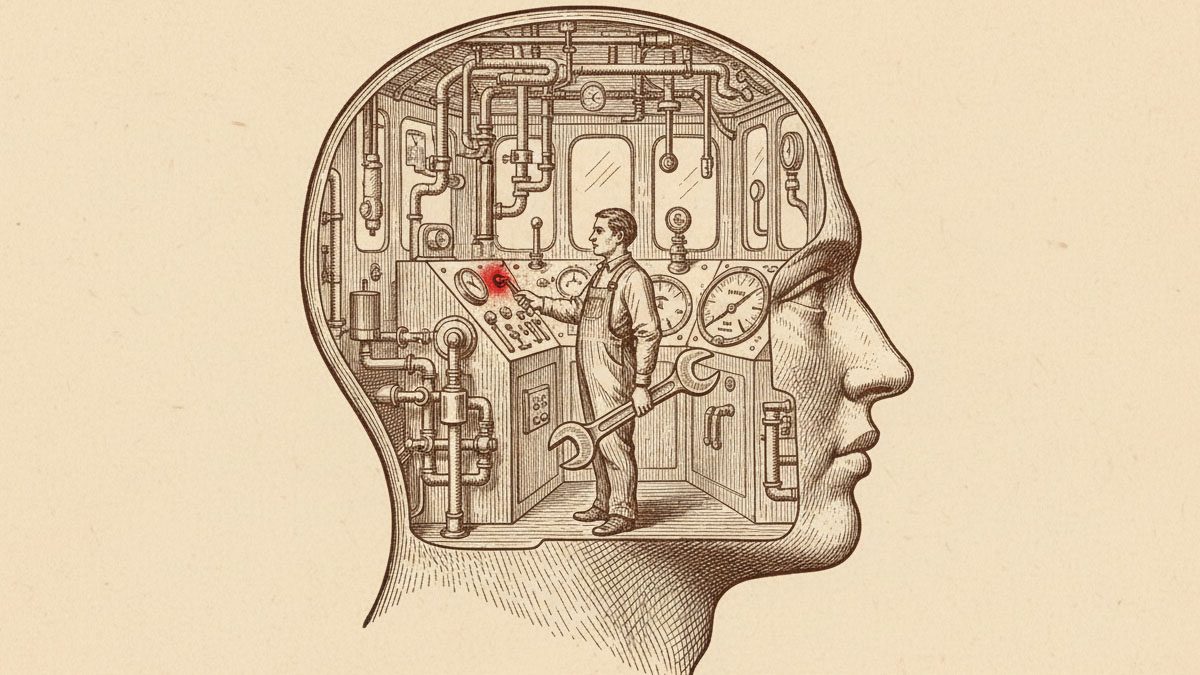
The mind is a complex engineered system. You can't install 'heavy software' (million-dollar goals, spiritual practices) on 'old hardware' (a burnt-out nervous system). All that does is crash the whole system.

In this article, I'll give you a clear, proven roadmap — a personal development plan built on the logic and mechanics of the mind, not on mysticism. We'll walk through the stages you simply cannot skip if you want lasting, sustainable results.

Why Beginners Fail:
The Biggest Self-Improvement Mistake

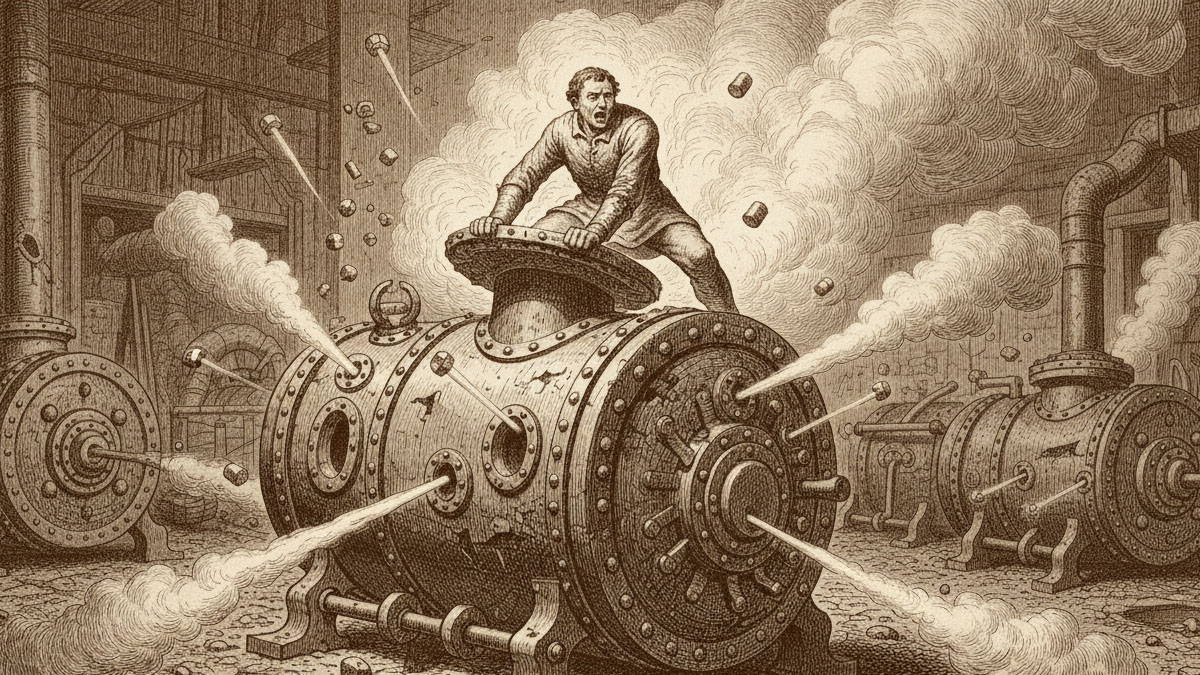
Engraving of a broken carriage being pushed to full speed — metaphor for chasing success without building a solid foundation first.

Imagine your car has broken down: the engine is smoking, the brakes have failed. What do you do?
The logical answer: 'Take it to a mechanic.'
What most people do in self-development: 'Paint it red, hang an air freshener, and try to hit 120 mph.'

Chasing ambitious goals — career, relationships, wealth — while you're running on chronic stress and apathy is setting yourself up for collapse.

Your mind is operating in 'Energy Deficit Mode'. Every new demand you place on it, even a beneficial one like exercise or learning, requires resources you simply don't have. The outcome is predictable: burnout, breakdown, and an even deeper sense of personal failure.

Engineering Rule #1:

First, fix the leaks and repair the system. Then, and only then, build up the power.

Our system is grounded in Abraham Maslow's Hierarchy of Needs

'Maslow's Pyramid 2.0'

Maslow demonstrated that you cannot pursue Self-Actualisation (the peak of the pyramid / our Stage 5) until your foundational need for Safety and Security is met (the base / our Stage 1).

  • When you're under chronic stress (no sense of safety), your brain physically shuts down the regions responsible for creativity and strategic thinking.

The engineering conclusion: Trying to find your 'Life Purpose' (Stage 5) while trapped in anxiety (Stage 1) is biologically impossible. Your brain simply won't allow it.

Personal Development Paths Compared:
Pick Your Best Starting Point

The difference between how most people approach self-development and the method taught at the Consciousness Workshop.

Table: 'Chaos vs. System'

Factor
💥 Chaotic Self-Development (Pop Psychology)
⚙️ The Engineering Approach (Consciousness Workshop)

Core Tool

Willpower and motivation ('Just push through!').

Discipline and habit architecture.

Response to Setbacks

Guilt and self-blame ('I'm so weak').

Debugging ('Where's the error in the code?').

Progress Pattern

Surges: intense effort → euphoria → crash.

Steady, compounding growth with no crashes.

Focus

External markers (money, status, success).

Internal state (energy, clarity, calm).

End Result

Achievement anxiety and burnout.

A resilient, grounded personality.

Stage 1 — Heal First:
Reduce Stress and End Emotional Suffering

Engraving of a swamp being drained before construction — metaphor for the first stage of personal development: clearing out negativity.

Your starting point: Background anxiety, irritability, poor sleep, and relentless mental chatter. You're running on autopilot.

At this stage, setting big goals is off the table. Your one and only task is to move out of the 'negative' and reach a stable baseline — zero.

What we work on (Course 1):

  1. Diagnosis:
    We identify the 'Negative Background' — the micro-stressors that drain 90% of your energy reserves.
  2. Safety first:
    We learn not to suppress emotions (which leads to physical illness), but to properly release them.
  3. Stopping the bleed:
    We apply rapid reset techniques ('The Fire Extinguisher') to stop haemorrhaging energy through anger and fear.

Stage outcome:

Mental quiet. A relaxed body. Restful sleep. The first reserves of free energy begin to appear.

Stage 2 — Find Motivation:
Discover Your Values and True Desires

Engraving of an oil lamp being filled — metaphor for rediscovering desires as the fuel that powers a meaningful life.

Your starting point: You feel calm, but there's no joy. 'I don't want anything' — numbness, grey days, a flatness to everything (anhedonia).

The car has been repaired, but the tank is empty. It's not going anywhere. For a human being, fuel isn't food — it's Desire. But not every desire gives you energy.

What we work on (Course 2):

  1. Filtering:
    We learn to distinguish 'Energising Desires' (genuine 'I want' feelings that give you fuel) from 'Draining Desires' (imposed 'I should' obligations that sap your strength).
  2. Reawakening:
    'Ghost Hunting' — we uncover suppressed micro-desires that have been buried, and begin bringing them back to life.
  3. Igniting the engine:
    We build positive momentum that carries itself forward.

Stage outcome:

A genuine appetite for life returns. Your eyes light up. You remember what it feels like to look forward to something. You're ready to move.

Stage 3 — Clear Thinking:
Build Confidence and Stop Self-Sabotage

Engraving of a craftsman polishing a lens — metaphor for clearing the mind of distortions and limiting beliefs.

Your starting point: You have energy, but you keep going in circles. You repeat the same mistakes, fear other people's judgement, and live by assumptions you've never questioned.

You've picked up speed, but your sat-nav (your mind) is leading you to a dead end. The reason: 'bugs' and 'viruses' in your mental operating system. These are your limiting beliefs and rigid assumptions.

What we work on (Courses 3 and 4):

  1. Antivirus scan:
    We locate your 'Blind Beliefs' — things like 'money is corrupt', 'I don't deserve it', 'the world is dangerous' — ideas you treat as your own thoughts, even though they're programs installed by others.
  2. Detachment:
    We learn to separate ourselves from our thoughts. 'I' am not my thoughts. I am the one who observes them.
  3. Building true confidence:
    We construct 'Grounded Beliefs' — a new, solid inner framework for your identity that doesn't depend on external validation.

Stage Result:

Crystal-clear clarity. You see reality as it is, not through the lens of your fears. You become impossible to manipulate.

Stage 4 — Upgrade Your Body:
Energy, Sleep, and Daily Habits That Stick

Engraving of a blacksmith tempering a sword — a metaphor for training the body as a precision instrument

Your starting point: Your mind is sharp, but your body can't keep up. You tire quickly, feel emotionally numb, and your vitality has taken a hit.

You've installed powerful software on weak hardware. It's time to upgrade the 'hardware' — your physical body. Not through punishment (grinding yourself into the ground at the gym), but through cultivating sensitivity.

What we work on (Course 5):

  1. Reconnecting with your body:
    Dissolving dissociation ('living in your head'). Learning to feel your body again.
  2. Tapping the source:
    Unlocking sexual energy (not just for intimacy — as the foundation of your life force and personal magnetism).
  3. Advanced mastery:
    Lucid dreaming and working with subtle states of consciousness.

Stage Result:

You feel fully alive — in every cell of your body. Boundless energy and a natural magnetism that others notice.

Stage 5 — Create Your Life Strategy:
Long-Term Growth and Mastery

Your starting point: Life is good. You feel happy. And yet a deeper question begins to surface: 'What's next? Why am I really here?'

This is the level of Mastery. The 'repairs' are done — now you begin building your skyscraper.

What we work on (Courses 8–10):

  1. Life strategy:
    Planning not by the month, but by the decade. Discovering Your Life's Purpose.
  2. Inner core:
    Building an unshakeable inner state that holds firm regardless of external storms.
  3. The Physics of Creation:
    Moving from reactive living to consciously shaping the events of your life.

Stage Result:

Conscious, self-directed evolution. Life lived as an art form.

Where to Start Today:
A Simple Step-by-Step Plan for Beginners

Now you have the full map.

The most common mistake is trying to leap straight to Stage 5. If you're currently feeling anxious, exhausted, or overwhelmed — Stage 1 is where you need to start. Don't try to do everything at once. Every building starts with its foundation.

I invite you to take the first and most important step: diagnose your current state and identify exactly which emotions are quietly draining your power.

Go to the free Lesson 1. It takes just 15 minutes — and it can save you years of going around in circles.

Why does genuine transformation take 6–12 months? It's simply how the brain works.

Personal growth isn't about sudden 'aha moments' — it's about Myelination (Neuroscience).

Every new habit — say, responding to a situation thoughtfully instead of reacting with resentment — is a new neural pathway. For that signal to travel quickly and effortlessly, the nerve fibre needs to be coated in myelin (its insulating layer).

  • This process takes a minimum of 60 days.
  • You cannot speed up myelin growth through willpower, any more than you can make grass grow faster by pulling it upward. Give your brain the time it needs to rewire at the hardware level.

Personal Development FAQ:
Answers for New Beginners

Books provide information — the 'what' — but not the skill — the 'how'. You could read every book ever written about swimming and still not know how to swim until you get in the water. Our method is built on practice. Use books for inspiration by all means, but do the real work through concrete, step-by-step methods.