Self-Coaching Techniques:
5 Skills to Coach Yourself Anytime

Author: Alex Guru | Reading time: 9 minutes

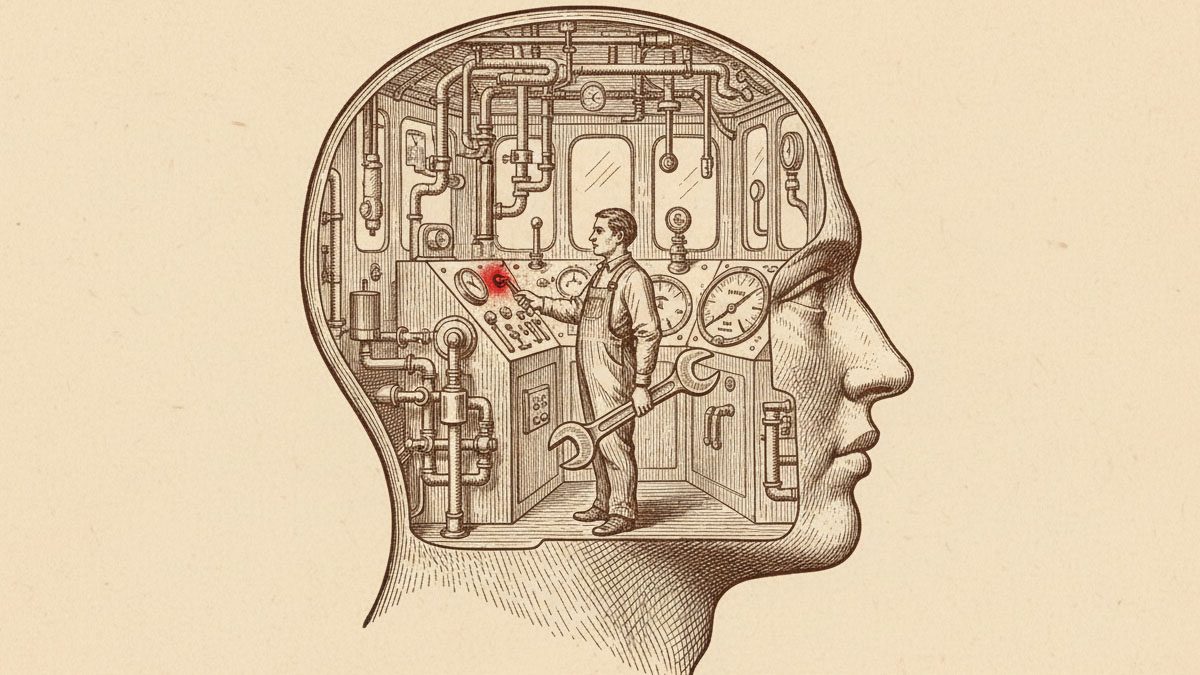
Engraving of a man adjusting the mechanism inside his own head — a metaphor for self-coaching and self-regulation.

The personal development industry is booming. Coaches, mentors, and advisors promise to guide you to success for a 'modest' fee of several hundred dollars an hour. And often, they genuinely help. But here's the real question: what exactly are they doing?

They don't possess any magic. They don't know your life better than you do. They simply have a toolkit — a set of questions and frameworks — that helps your mind work more effectively.

I firmly believe that learning to coach yourself is the most essential skill of a mature adult. Constantly relying on an external coach as a crutch is, in a sense, admitting that you can't manage your own mind.

At the 'Consciousness Workshop', we give you the tools to become the Engineer of your own life — not a lifelong patient. Here are 5 professional skills that will allow you to run self-coaching sessions more effectively than any hired expert. You'll discover that self-coaching isn't talking to yourself — it's a scientifically grounded metacognitive practice.

The Core Axiom of Coaching:

"Your main opponent is not across the net — they live inside your own head.

Performance = Potential minus Interference (Internal Dialogue).

The goal of self-coaching is to eliminate the Interference."

Timothy Gallwey, father of modern coaching and author of The Inner Game of Tennis.

How Self-Coaching Works:
Have a Wise Conversation With Yourself

When we're faced with a problem, most of us have an internal dialogue that sounds more like a heated argument:
— "You've gone and ruined everything again, you failure!" (The Inner Critic)
— "But I was trying my best — it was just bad timing..." (The Inner Child / Victim)

That kind of inner noise gets you nowhere. A coach's job is to stop the spiral and steer the conversation toward problem-solving. To do this on your own, you need to master self-coaching techniques that shift your brain into a different mode of thinking.

The Solomon Paradox is the scientific explanation for why we give brilliant advice to others — yet make a mess of our own lives.

Why is it harder to help yourself than a friend?

Psychologists at the University of Waterloo (Igor Grossmann) demonstrated the phenomenon known as the 'Solomon Paradox'.

  • When we think about other people's problems, we engage the prefrontal cortex — the rational, logical part of the brain.
  • When we think about our own problems, we get pulled into the amygdala — the emotional, fear-driven centre.

The solution:
To become your own coach, you need to deliberately create psychological distance (Self-Distancing). Instead of asking "What should I do?", ask "What should [Your Name] do in this situation?".

Skill 1:
Self-Diagnosis to Clarify What’s Really Going On

Engraving of a prospector panning for gold — a metaphor for separating facts from emotions.

A coach opens every session with the question: "What's going on?" Most people struggle to answer honestly. They say things like: "I feel terrible" or "Everything is just so hard right now."

The first self-coaching skill is the ability to distinguish clearly. You need to separate facts from emotions — and then separate emotions from your sense of self.

  • Instead of "I'm depressed" (a sweeping diagnosis), say: "I'm noticing low energy and a lack of motivation."
  • Instead of "He drives me mad," say: "I'm observing an anger response in myself triggered by his words." This is the Impartial Observer technique — it lets you look at your emotions as data on a screen rather than drowning in them.

The Tool: 
The 'Impartial Observer' technique. You examine the situation as a diagram — not as a drama.

A coach charges you for checking in on your 'homework'. "Did you actually do what you said you would?"

In self-coaching, you replace the external accountability partner with the Fragment Method — a form of gamification. You don't set yourself impossibly large tasks. You break the goal down into 5-minute chunks.

Your aim is not to "transform your life by Monday" (read why this doesn't work in The Art of Small Steps), but to complete 3–4 'fragments' (small, meaningful actions) today. This removes resistance and builds the habit of winning.

Skill 2:
Ask Powerful Coaching Questions With a Curious Mindset

Engraving of a researcher examining a mechanism — a metaphor for an analytical approach to personal challenges.

The coach's most powerful tool is the right self-coaching questions. The wrong question leads you into a dead end ("Why does this always happen to me?"). The right question opens up possibilities.

In our method, we replace the 'Victim' mindset with the 'Explorer' mindset.

  • A bad question: "Why am I so lazy?"
  • The Engineer's question: "What secondary gain is keeping me from taking action? What internal 'circuit breaker' has tripped?"
  • A bad question: "What if it doesn't work out?"
  • The Engineer's question: "What's my Plan B? What information do I need to gather to reduce the risk?"

You need to learn to ask yourself questions that demand analysis — not excuses.

Tool: The GROW Model — the gold standard framework in professional coaching worldwide.

No need to reinvent the wheel. Use the structure developed by Sir John Whitmore:

  • G (Goal) — Goal:
    What do I ultimately want to achieve?
  • R (Reality) — Reality:
    Where am I right now? What are the facts (without the emotion)?
  • O (Options) — Options:
    What strategies are available to me (at least 3)?
  • W (Will) — Will:
    What specific action will I take in the next 24 hours?

Work through these four steps and you will inevitably find a way forward.

Identify Your Inner Voice:
Is It the Critic, Victim, or Coach?

People often confuse self-criticism with genuine self-reflection. The table below gives you a clear filter to tell them apart.

Table: 'Inner Critic vs Inner Coach'

Parameter
👹 Inner Critic (The Virus)
👷‍♂️ Inner Coach (The Engineer)

Time focus

The past («Why did you do that?»).

The future («How can this be fixed?»).

Type of questions

«Why?» (Looking for someone to blame).

«How?» and «What?» (Looking for a solution).

Tone

Accusatory, sarcastic.

Neutral, curious.

Goal

To punish and induce shame.

To gather data and form a plan.

Outcome

Apathy («I'm worthless»).

Action («Let me try it this way»).

Skill 3:
Separate Thoughts From Guidance (Captain vs Advisor Method)

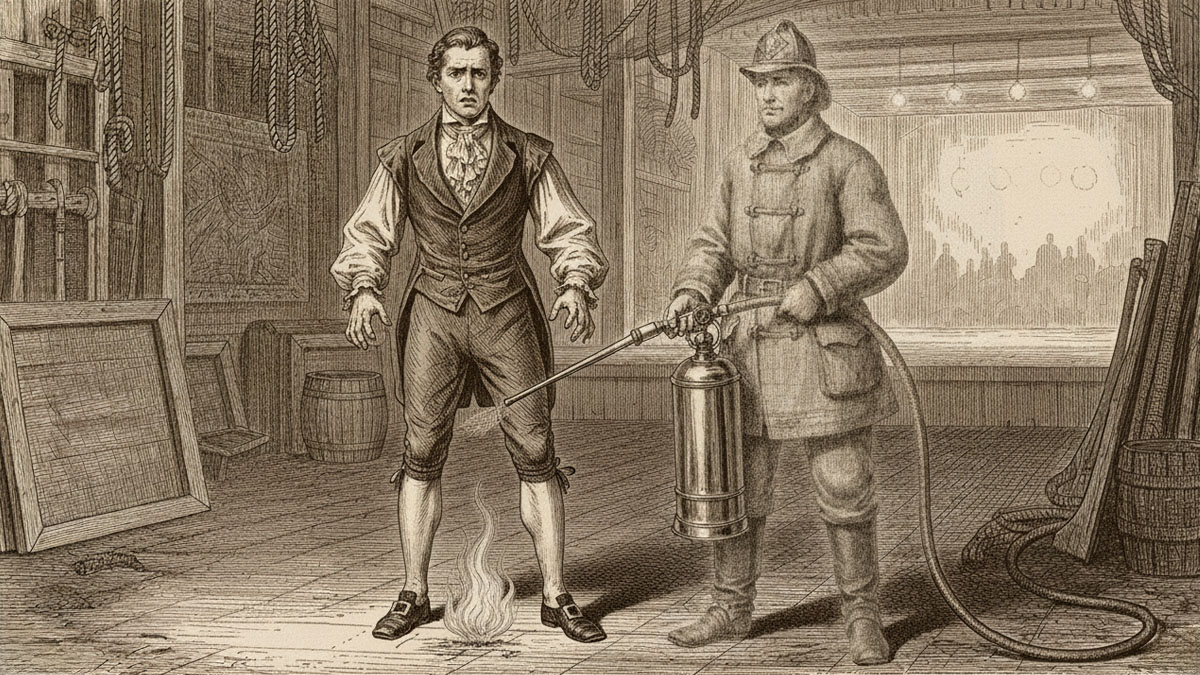
Engraving of a captain and an advisor — a metaphor for balancing desires (heart) and logic (mind).

One of the most common causes of feeling stuck is the conflict between 'I want' (emotion) and 'I should' (logic). A coach typically acts as a mediator between the two.

In self-coaching, you use the 'Captain and Advisor' technique.

  1. The Advisor (Reason): 
    Their job is to gather data, assess risks, and lay out the options. They do not make decisions. They simply provide the report.
  2. The Captain (Heart / Desire): 
    Only the Captain has the authority to steer the ship. They review the Advisor's report and say: "The risks are clear — but we're sailing there anyway, because that's where my goal lies."

This resolves the inner conflict. Logic feels heard and settles down, while Desire takes the wheel.

Technique:
Illeism (Talking to Yourself in the Third Person)

Practice: 'Illeism' — the technique used by Julius Caesar.

To activate your 'inner wise self', stop using the word 'I'.

Refer to yourself by name or as 'He/She/They'.

  • Unhelpful:
    "What should I do? I'm completely lost." (Triggers the emotional state).
  • Effective:
    "Right, so Alexander is feeling lost right now. What would be the most logical next step for Alexander?"

This shifts your brain from a state of distress into a mode of observation and analysis.

Skill 4:
Manage Your Energy and Motivation to Avoid Burnout

Engraving of a person with a furnace inside — a metaphor for independently replenishing one's own energy.

A coach often acts as an external battery, charging you up with motivation. But that's a dependency. The moment the session ends, the energy drops.

You need to learn to be your own self-sustaining generator.

  • How to work through things on your own when you have no energy? You can't — not yet. Resource first.
  • You use the 'Generating Joy' and Joy Anchors techniques to enter a resourceful state first. (We explore in depth why you can't solve problems when you're running on empty in the lesson on your Energy Budget).
  • You don't try to drive on an empty tank.

Skill 5:
The Small-Steps Action Plan for Consistent Progress

Engraving of a craftsman assembling a mosaic — a metaphor for the fragment method and the power of small steps.

A coach charges you for accountability — essentially asking, 'Did you follow through on what you committed to?'

With self-coaching, you replace that external accountability with the Fragment Method (gamification). Instead of overwhelming yourself with impossible goals, you break them down into 5-minute actions.

Your aim is not to 'transform your life by Monday' (read why that approach fails in the article The Art of Small Steps), but to complete 3–4 'fragments' (small meaningful actions) today. This dissolves resistance and builds a habit of winning.

Build Self-Awareness:
Become Your Own Coach for Life

You don't need someone else to tell you what to do. Deep down, you already know the answers. You simply need the right tools to cut through the noise of fear and self-doubt.

The 'Consciousness Workshop' is exactly that — a set of professional-grade tools translated into clear, practical frameworks anyone can use.

Ready to master one of the most powerful self-coaching tools for making difficult decisions — right now?

Learn how to align your Head and your Heart, so you never have to second-guess your choices again.

Explore the method in this free Lesson: How to Make Decisions You Won't Regret: The 'Captain and Advisor' Method.

It could save you thousands in consulting fees.